
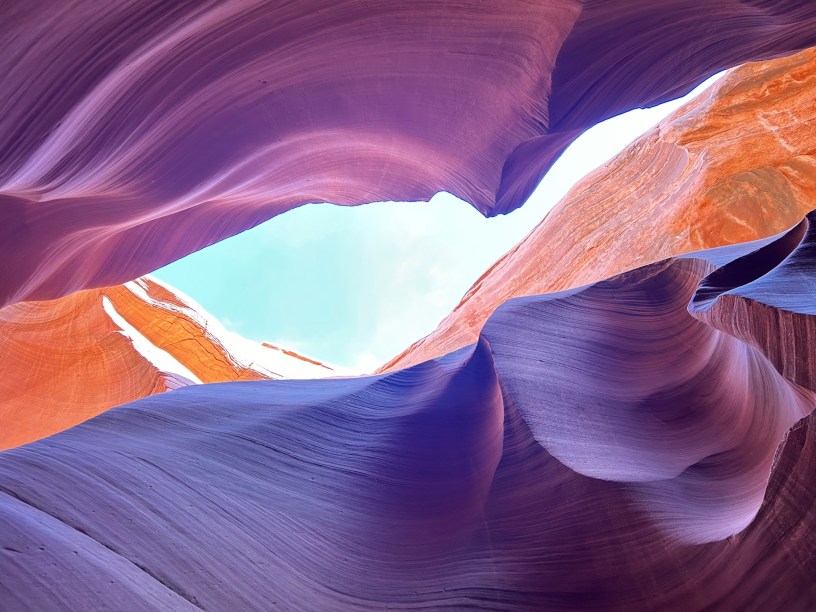
When Bailey and I were planning our Arizona trip, there were 2 things she definitely wanted to see; The Grand Canyon, and Lower Antelope Slot Canyon. I had never heard of a slot canyon and didn’t know what it was. When I looked it up online, it was pretty easy to see why she was so interested.
Our visit actually starts with the drive we took to get there. It’s worth a description because it really helps put the variety of Arizona landscapes into perspective. If you don’t agree- go ahead and skip down to the Canyon section awhile. 🙂
The Drive
We started the day in Grand Canyon National Park and headed east along the canyon on Route 64. It was another beautiful morning with intermittent views of the canyon and miles of snowy pine forest. At a certain point, the road turned downward. As we approached, it looked sort of like we were driving off a cliff, but when we got to that point, the downward slope was actually pretty uneventful- at least from a driving perspective.
But out the window everything was changing. It seemed like it took only seconds for the pine forest to thin and disappear into a rocky type of snow-less grassland. Not long after that the scenery changed again, and again, and again. As we drove from an elevation of 7,000 feet down to about 4,000, it seemed like somebody was scrolling quickly through their camera roll, only the photos were real life scenes. Each had its own landscape; large brown mounds, flat areas of grassland, large buttes and rock formations with tiered coloring, and finally, many miles of tan and reddish sand, sprinkled with vegetation and punctuated by rocks and hills.
We were enjoying the views, but taking pictures out of a moving car window doesn’t yield the best results. For a better look at the scenery, visit this website. The first section of photos tells the story.
Things became more stable as we merged with Route 89 and headed north toward Page. The highlight of that stretch was a large, red-rocked, pass that went through and over a butte. According to the location info on the pics I took, the place was called Marble Canyon-Bodaway-Gap Chapter, which is in the Navajo Nation.
Several miles prior, Bailey decided that Aaron Copland’s music was the perfect accompaniment to these wide open and stunning scenes, and she was right! We had Fanfare For The Common Man on the car stereo when we stopped at a scenic overlook that also featured a Navajo art stand. A woman came up to the stand operator and spoke to her in a language I presumed was Navajo. It was very cool!
Here’s a look from the lookout:
From there, it wasn’t much farther to Page and the slot canyon.
Lower Antelope Slot Canyon
Welcome all ye who skipped straight to this part!
Honestly, this canyon was one of the coolest and most beautiful things I’ve ever seen.
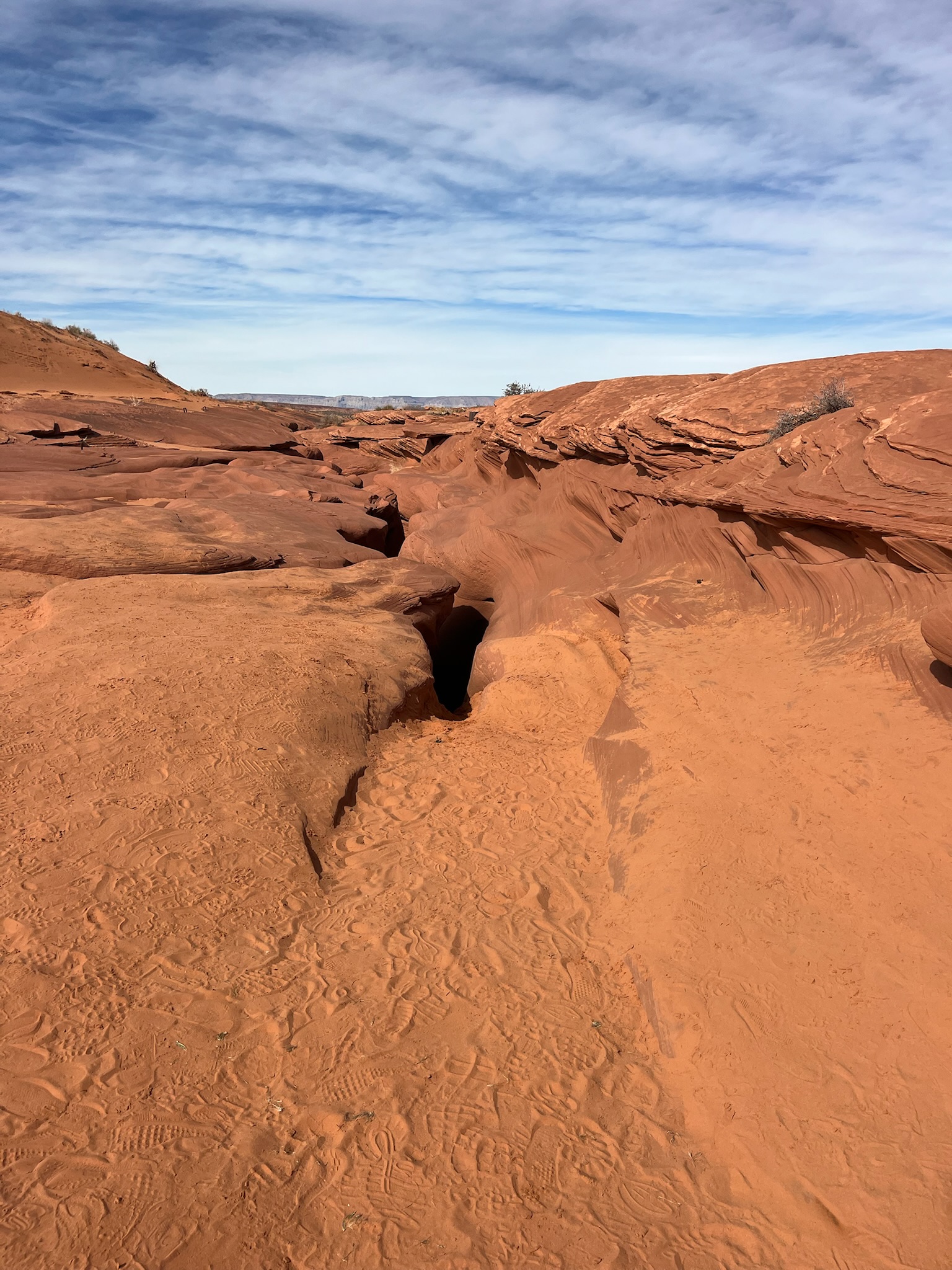
Located 5 miles outside of Page, AZ and on Navajo land, Lower Antelope Slot Canyon is basically a deep and long crack in the red, sandy ground. It was created over millions of years by flash flood waters, and continues to be fed and shaped by those waters today. Wind plays a big part in the twists and shapes in the canyon as well.
The first thing I can tell you about our visit is that I’m really glad we were there in the winter. The weather was perfectly sunny with temps in the 50’s. It felt great, but you could tell that things could get unpleasantly hot really quick!
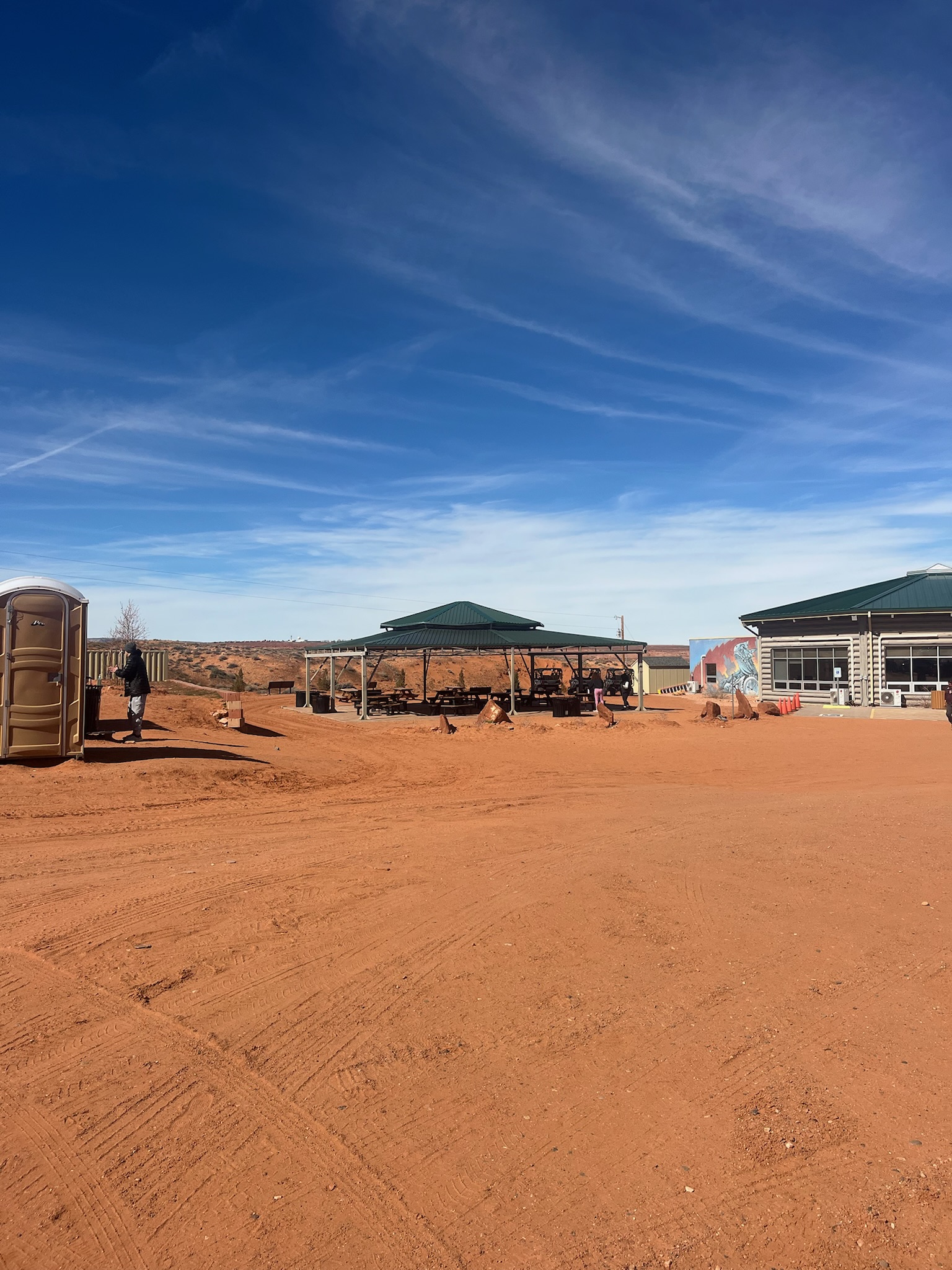
We chose Dixie’s Lower Antelope Canyon Tours for our visit; there are a few different companies to choose from. Waiting on the porch for our group to start, you really couldn’t tell there was something amazing right in front of you, it just looked like more of the same rolling, red, rocky hills we had been seeing on the drive in.
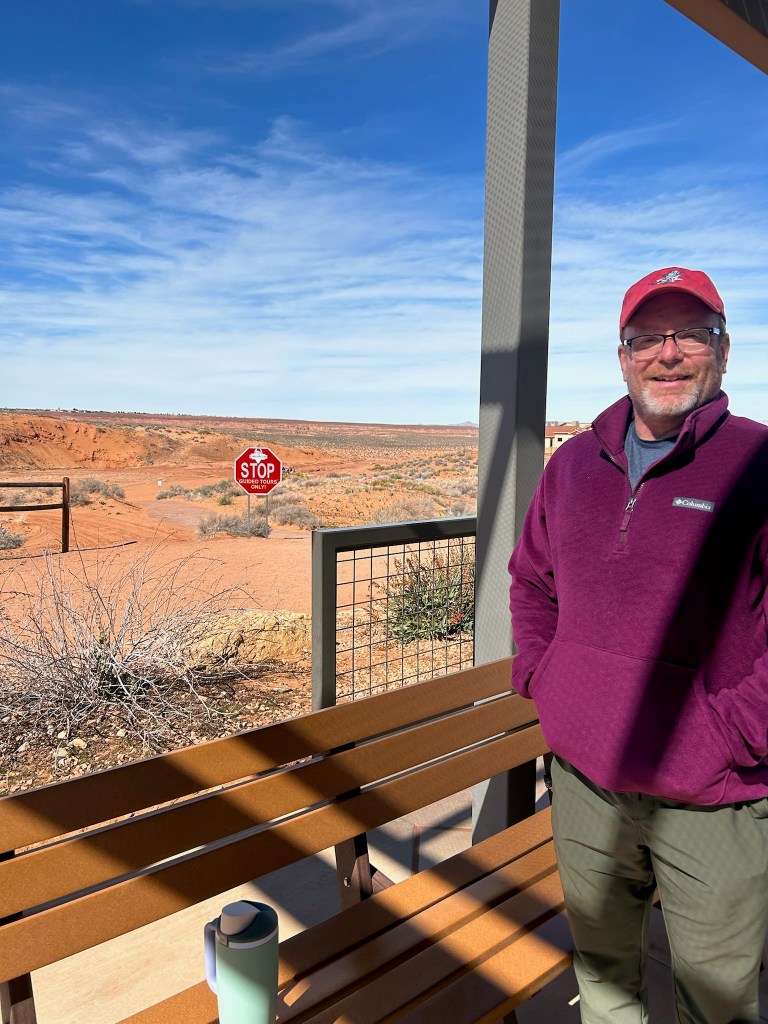
Our guide was Orin Yellowman, a Navajo man who quite honestly smelled amazing from several feet away (Bailey agrees)! He walked us down to the far end of the canyon, describing many of the plants as we passed by. As we were on Navajo land and many of the houses seemed very primitive, I had been wondering how people could live in these dry, sandy conditions. But, as Orin explained, there is much more to the local vegetation than one might expect.
The walk to the canyon entrance wasn’t too long- about 10 minutes. From there, we waited on the stairs for our turn to enter. The canyon hosts multiple tour groups at once and, although it’s not in any way a problem, the guides do have to do a bit of people management to make it work.
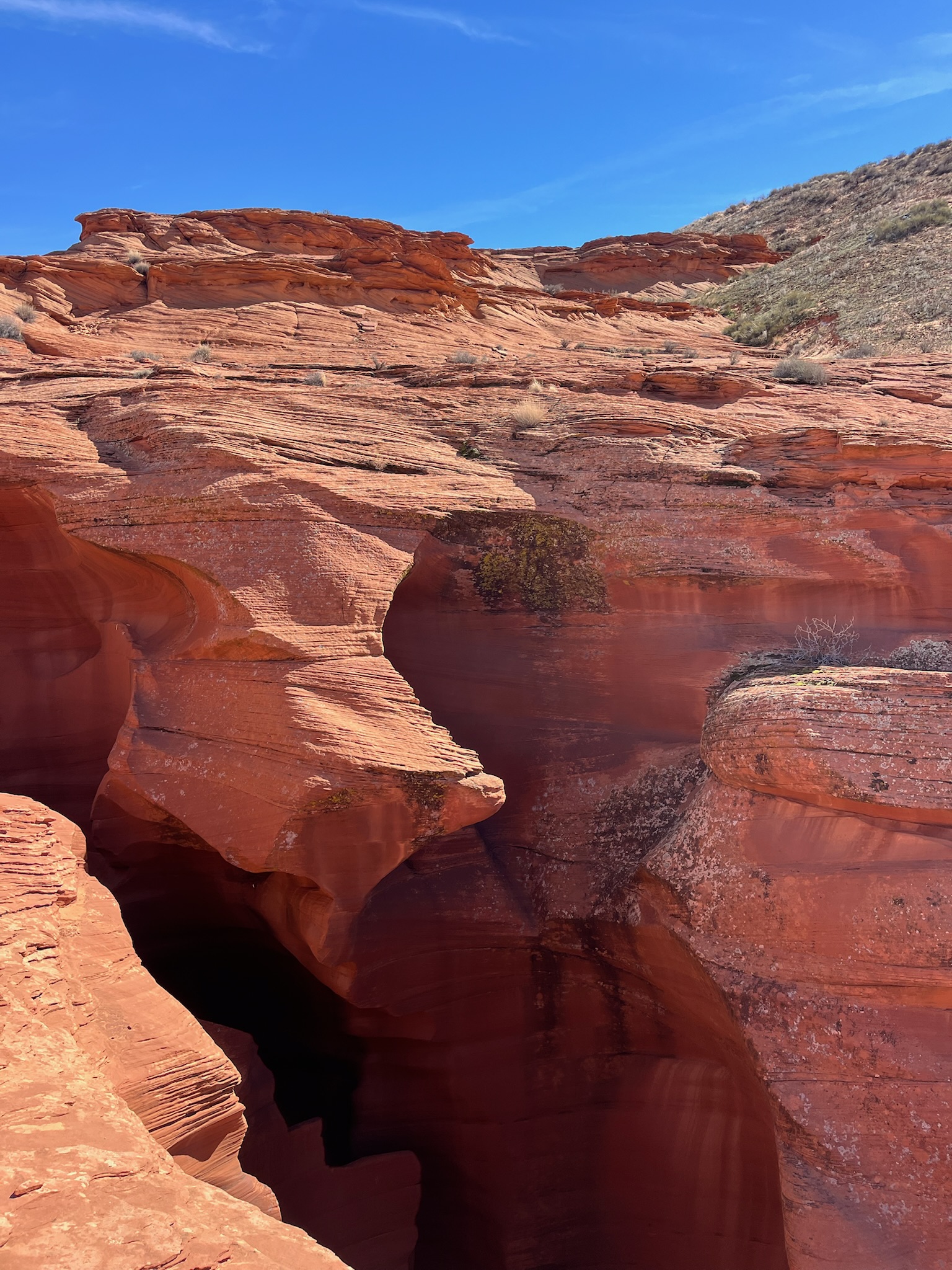
When you reach the floor/entrance (about three or four short staircases down) the impact of what you’re about to do becomes very clear. It’s stunning, beautiful, peaceful, calming, and yet a little scary at the same time.
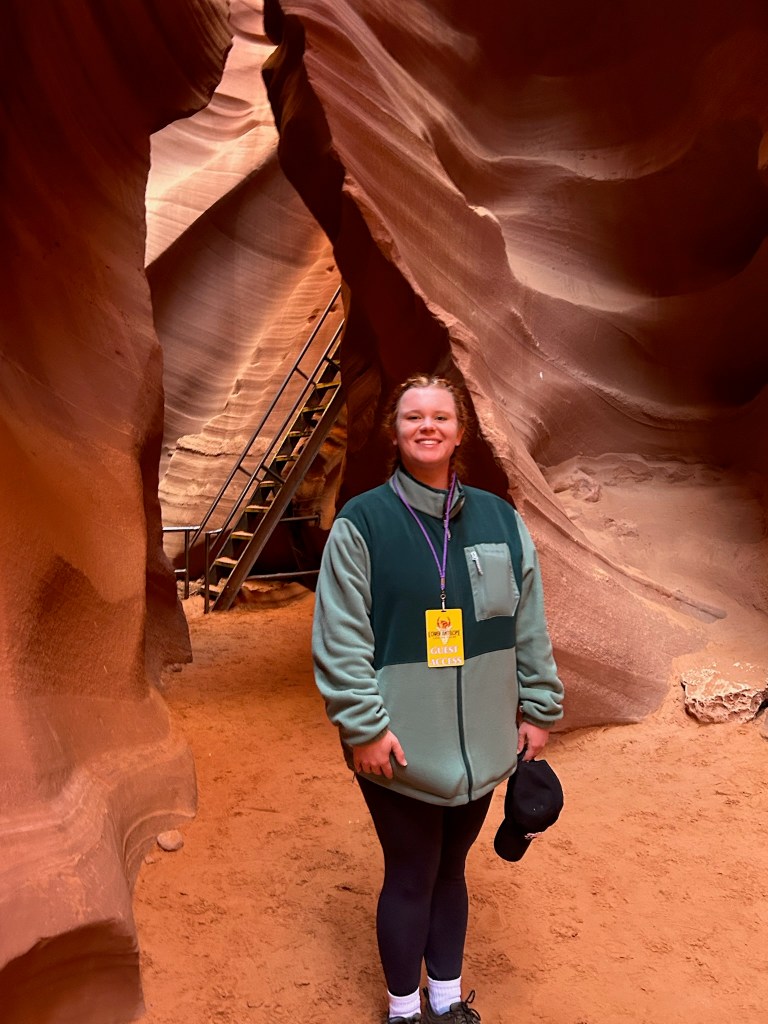
There isn’t much sense in trying to describe the actual tour in words. The pictures can do a better job of that- so here they are! I almost want to apologize for including so many, but I won’t. The lighting in the canyon changes by the second and every glance brings a new look, a new shape, or a new color. If you think you’ve seen pics like this somewhere before, you have! Microsoft did a photo shoot in the canyon to create Windows wallpaper, and National Geographic has done features as well. So have countless others.
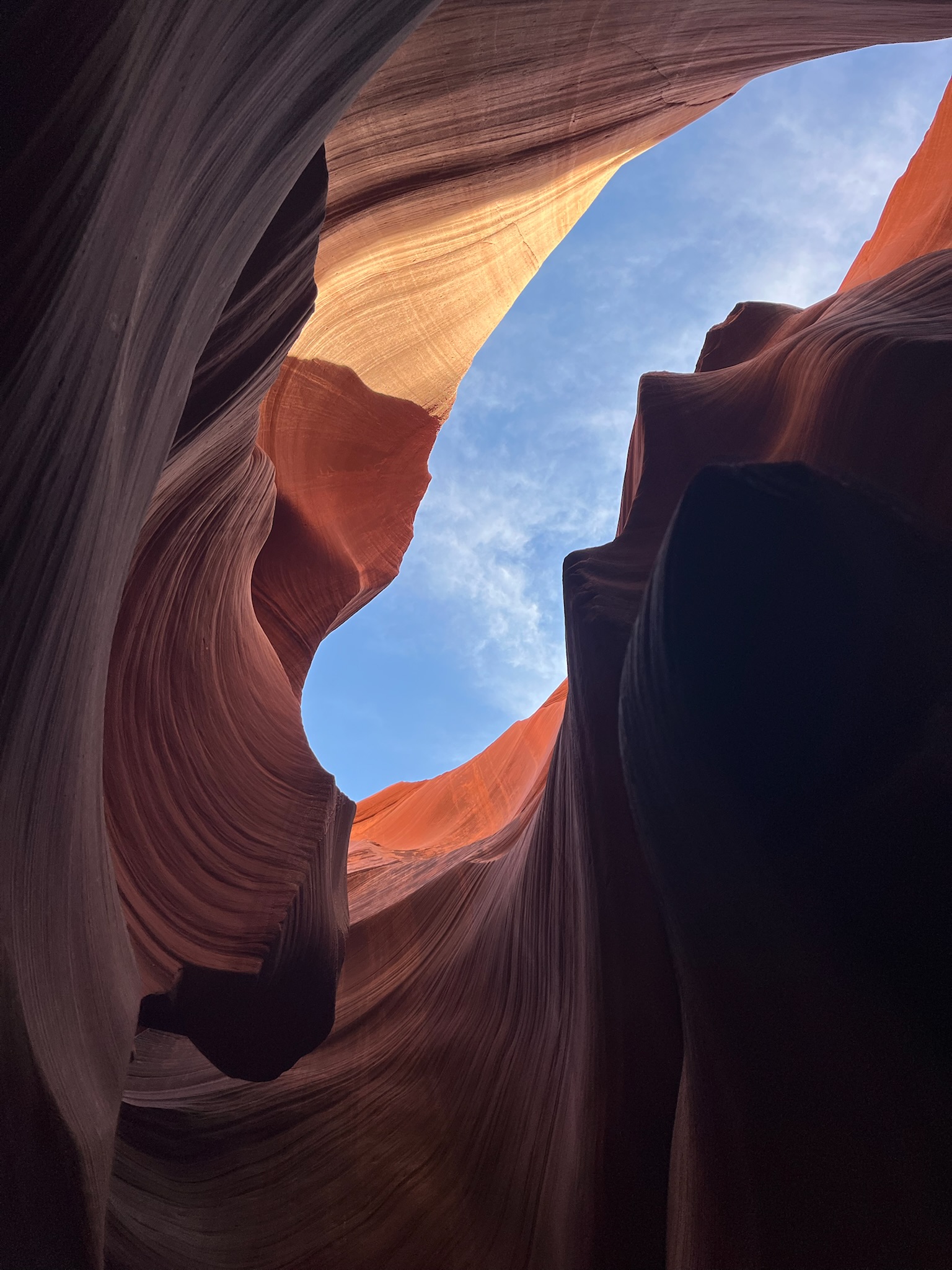
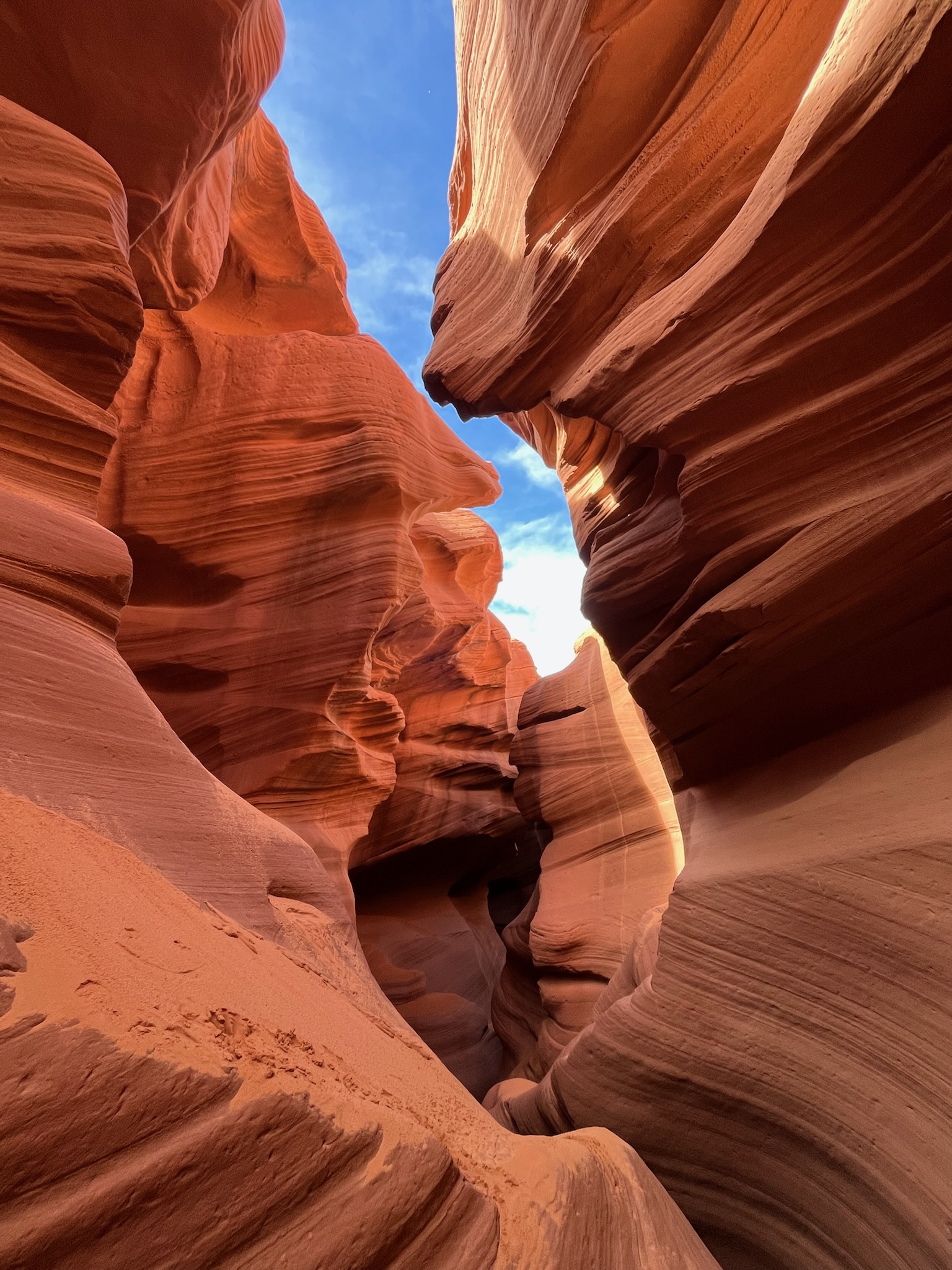
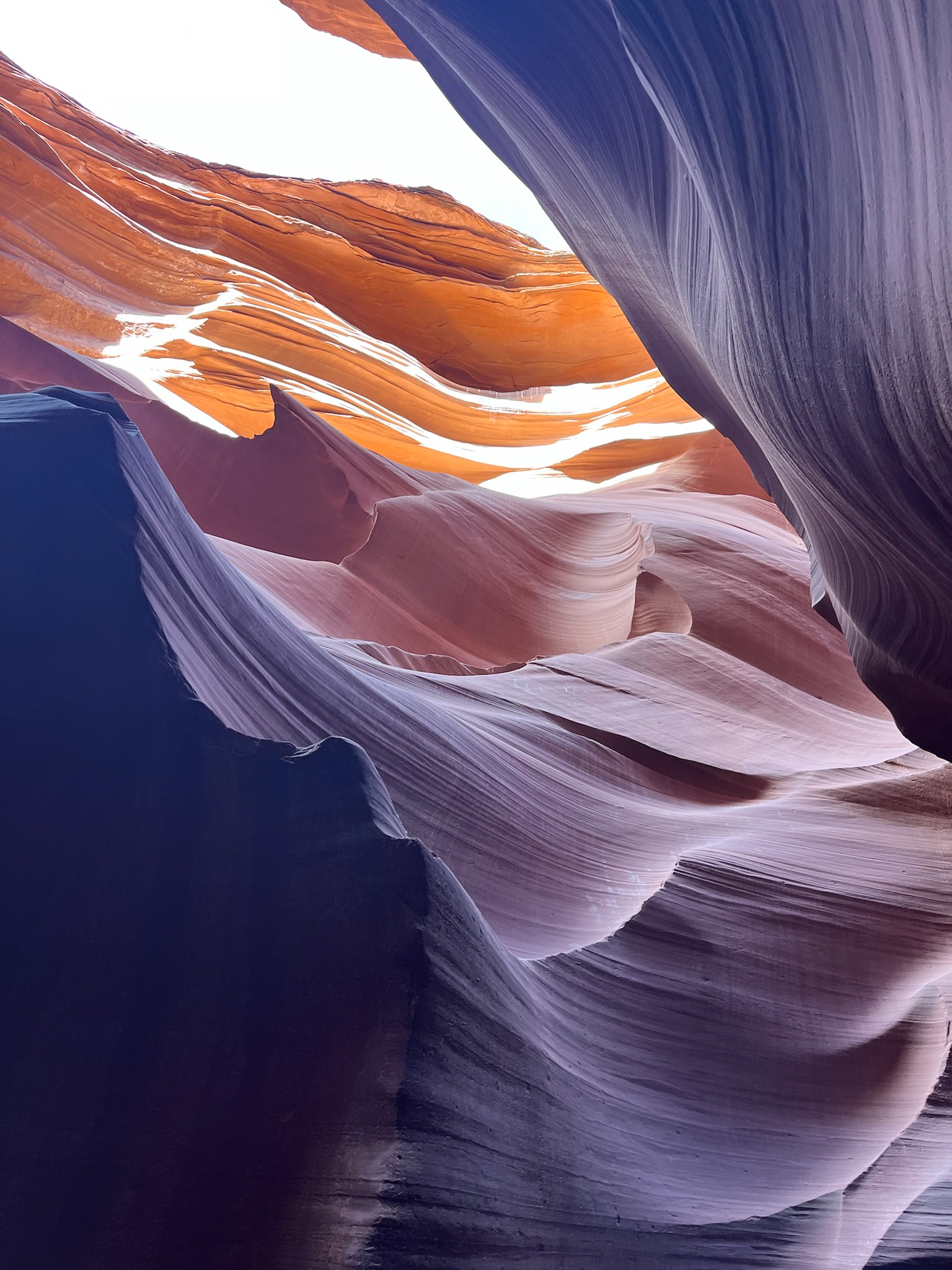
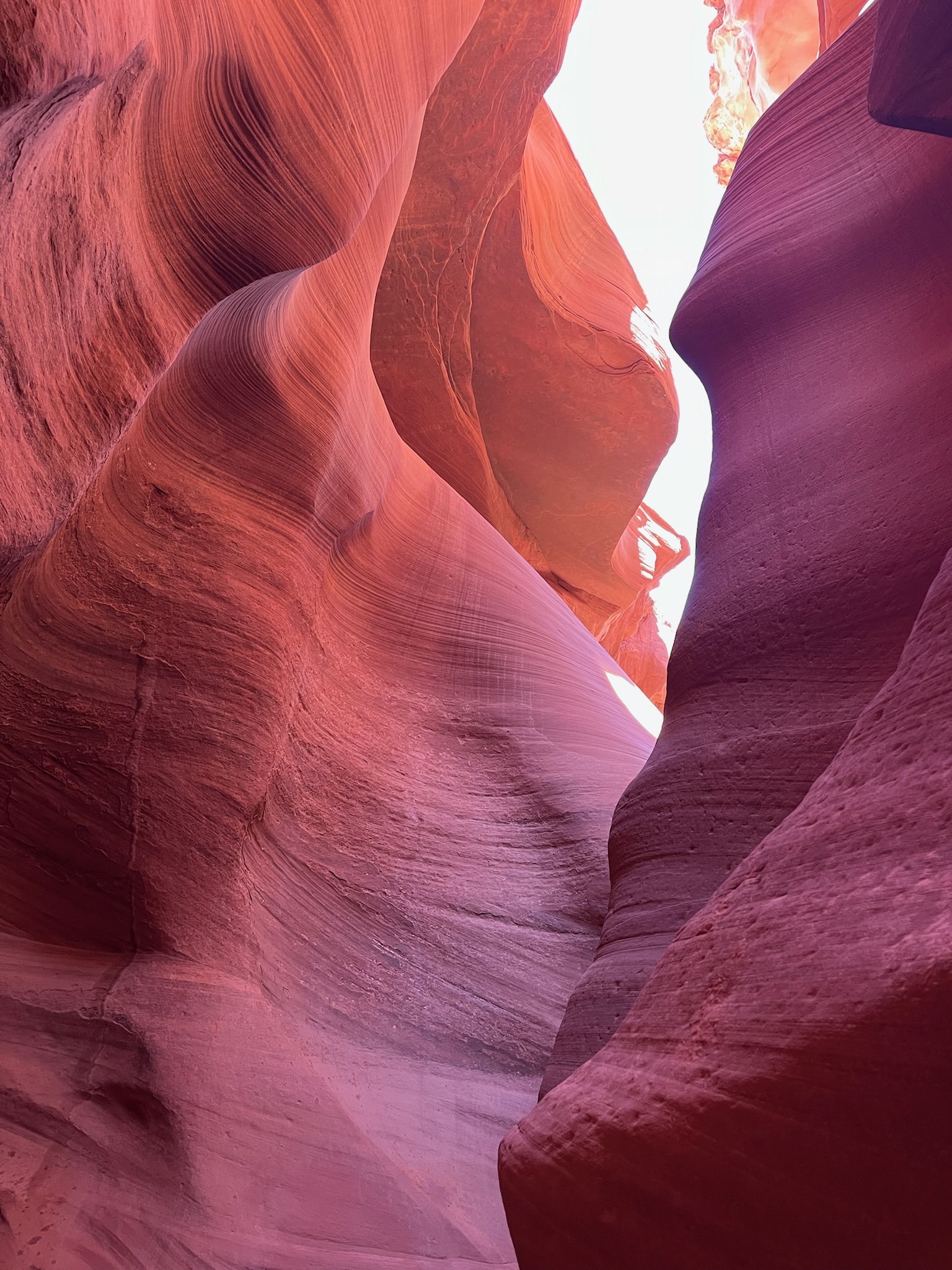
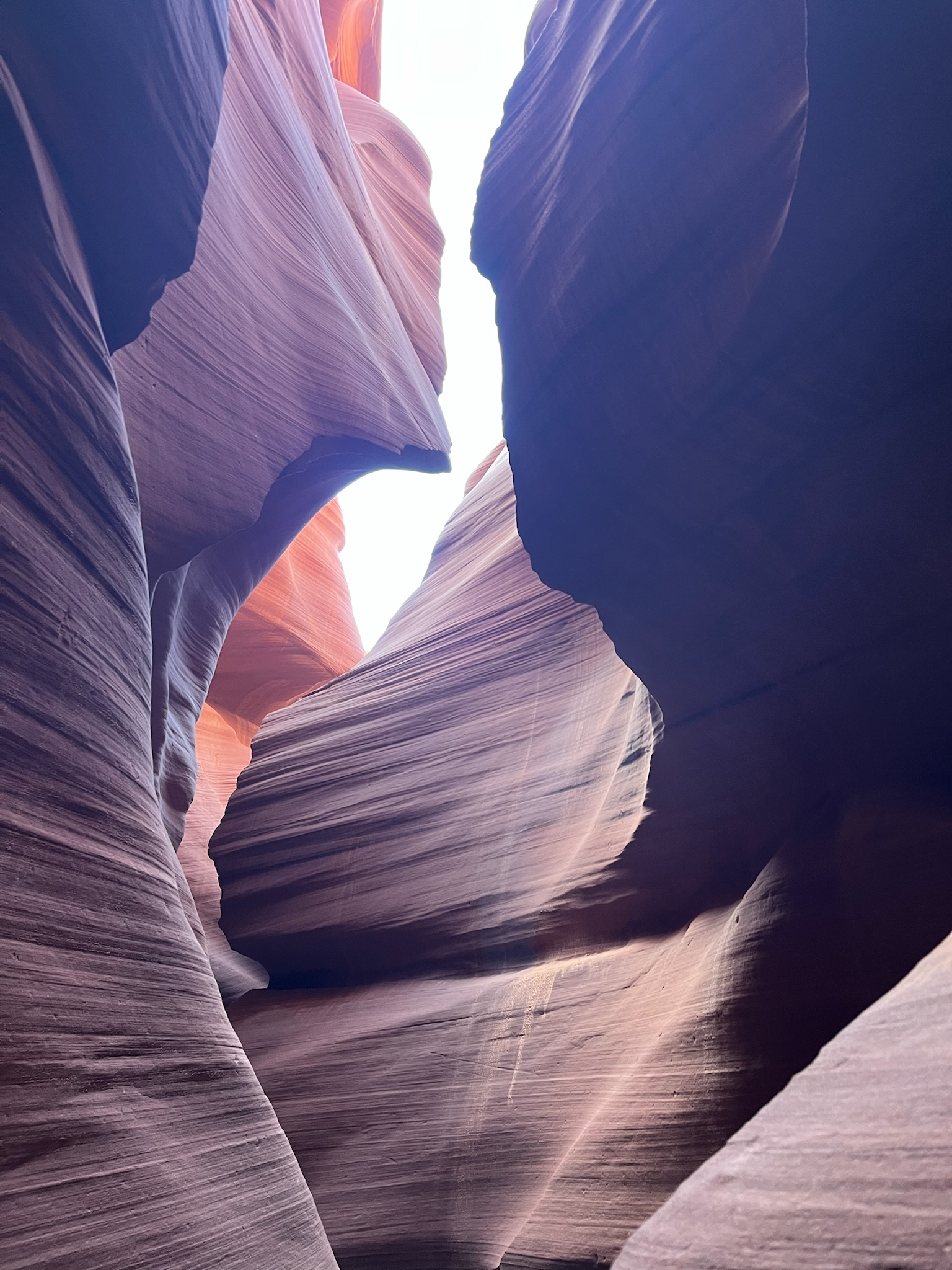
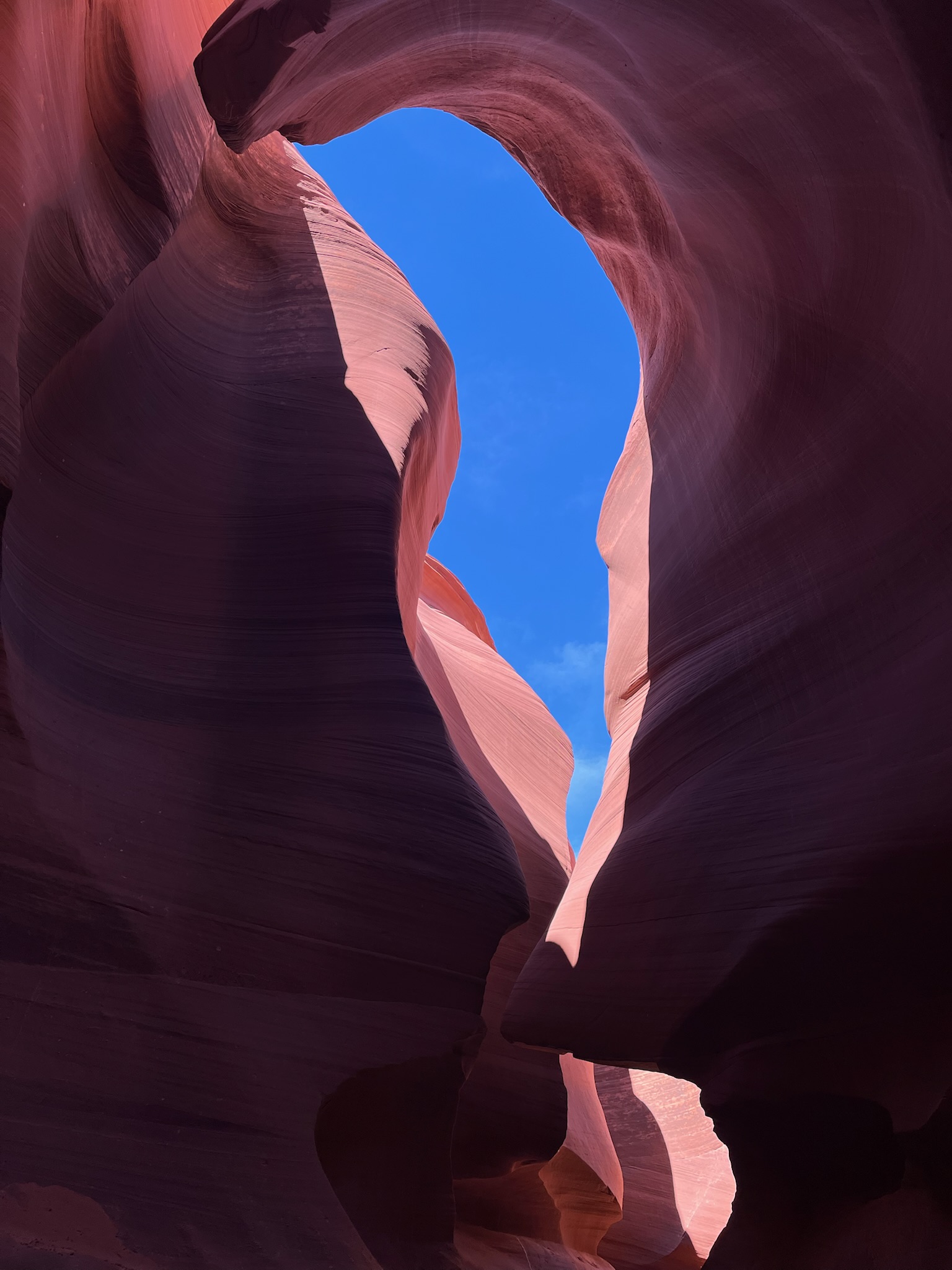
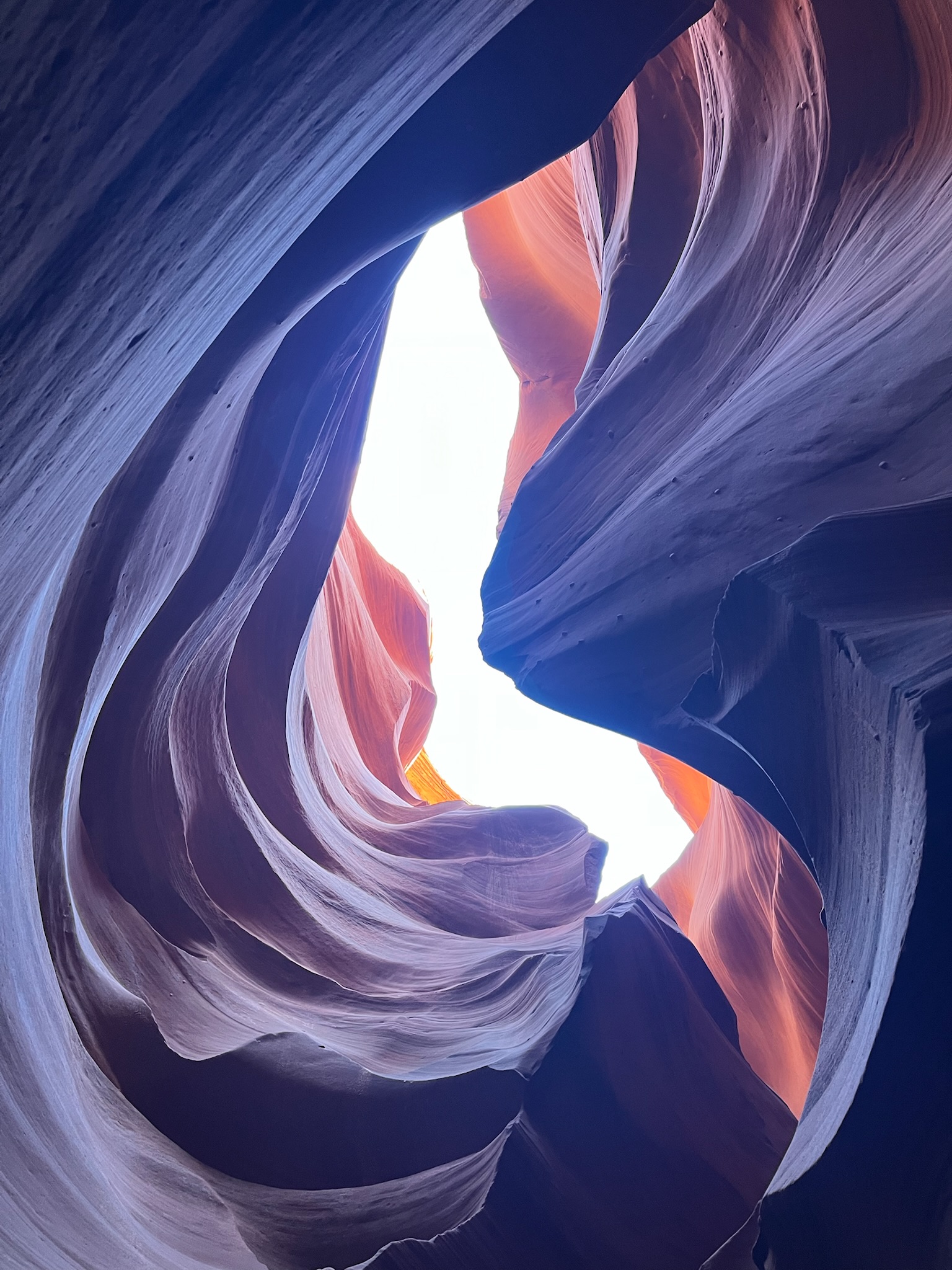
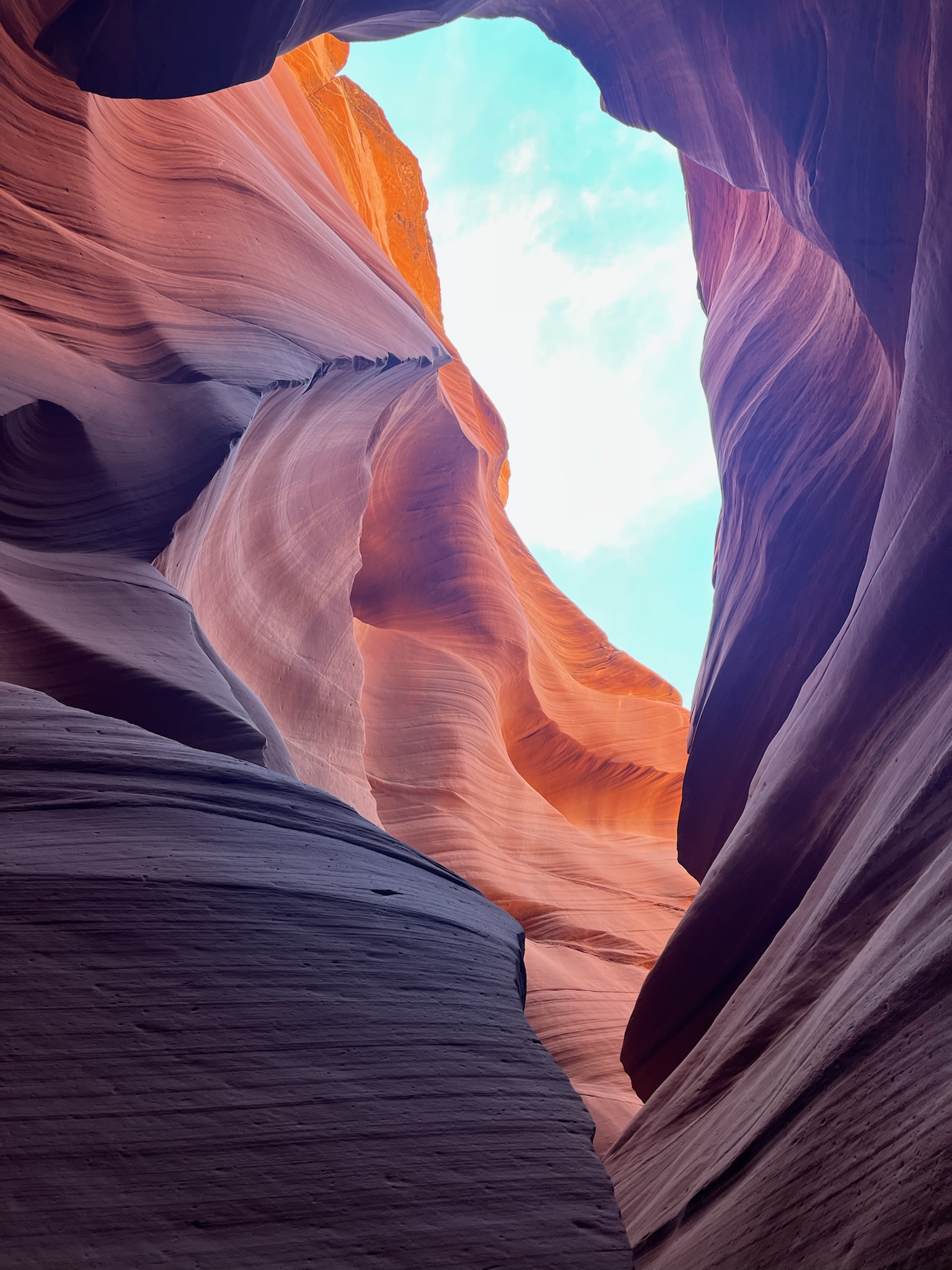
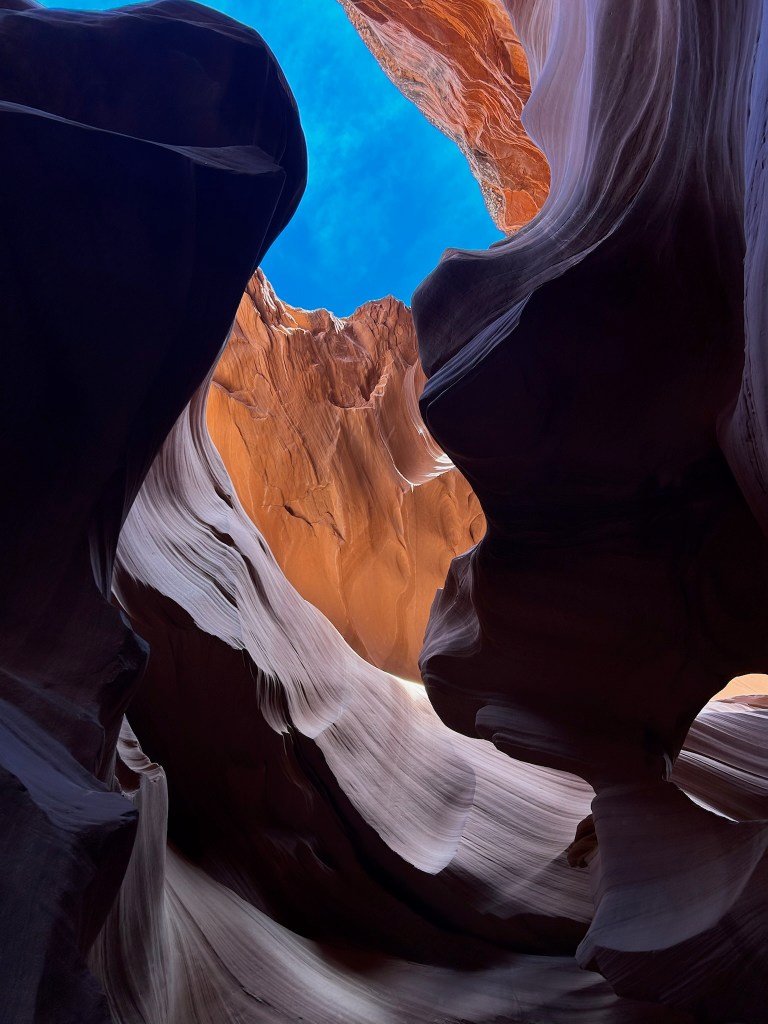
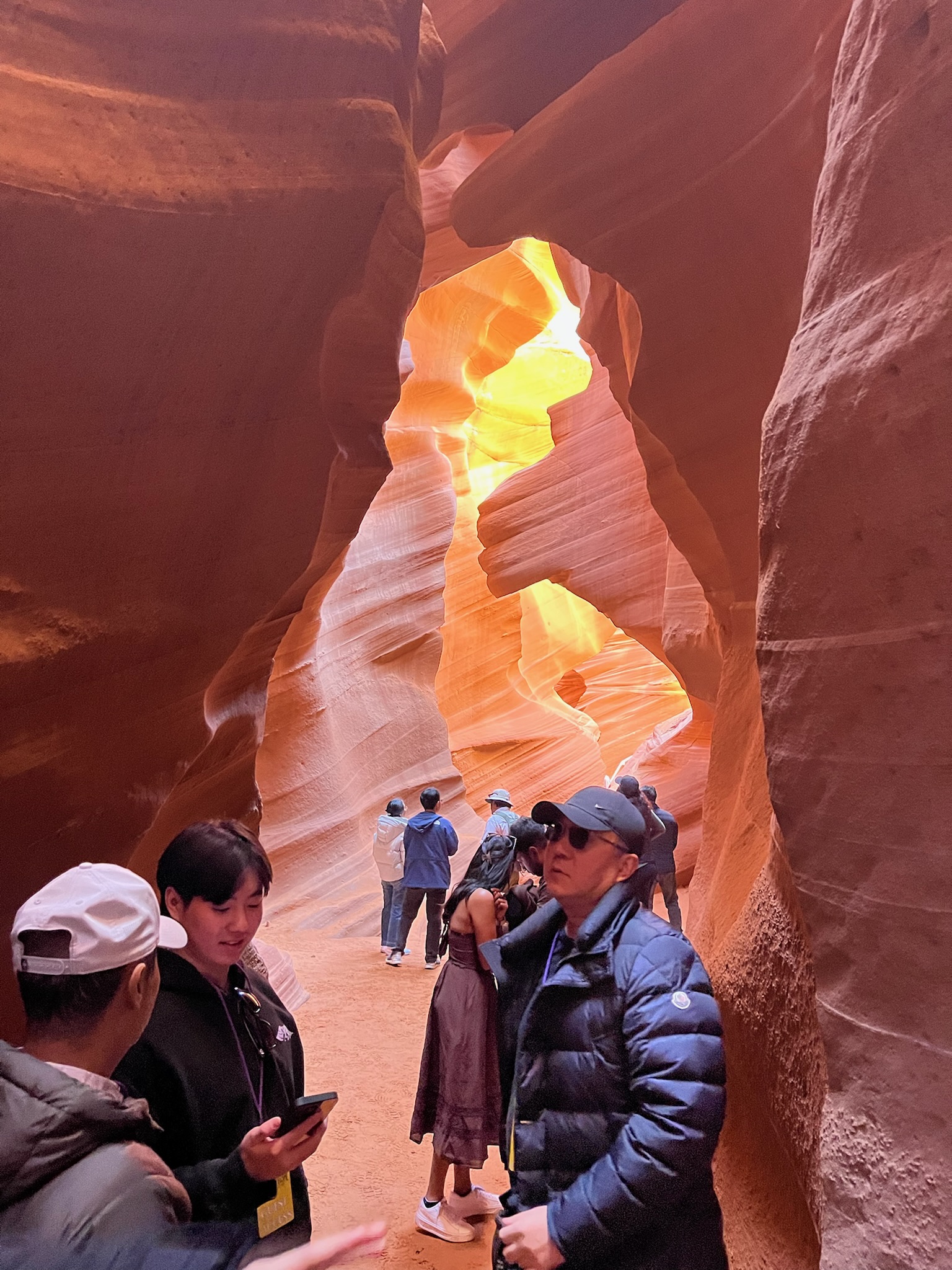
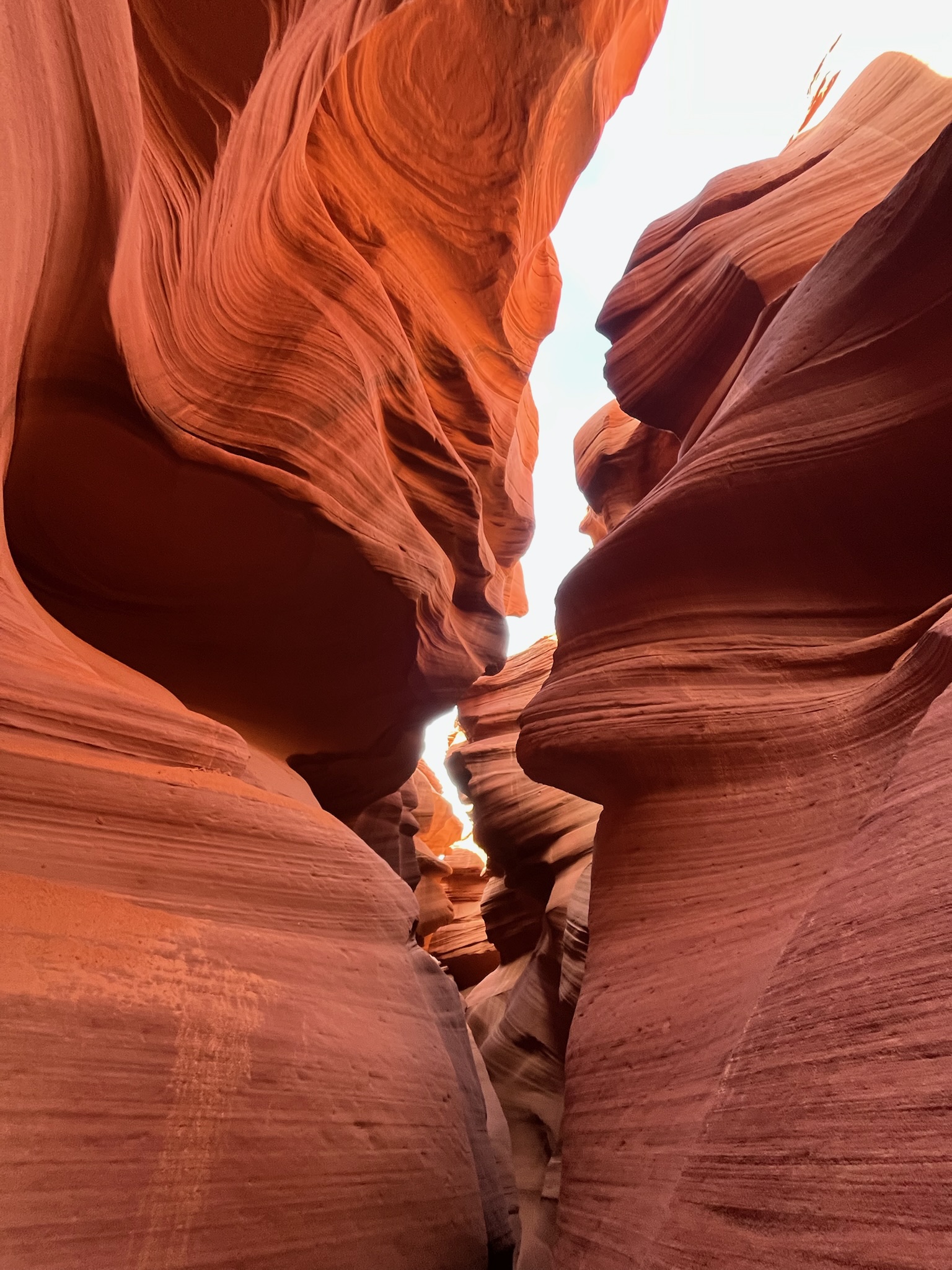
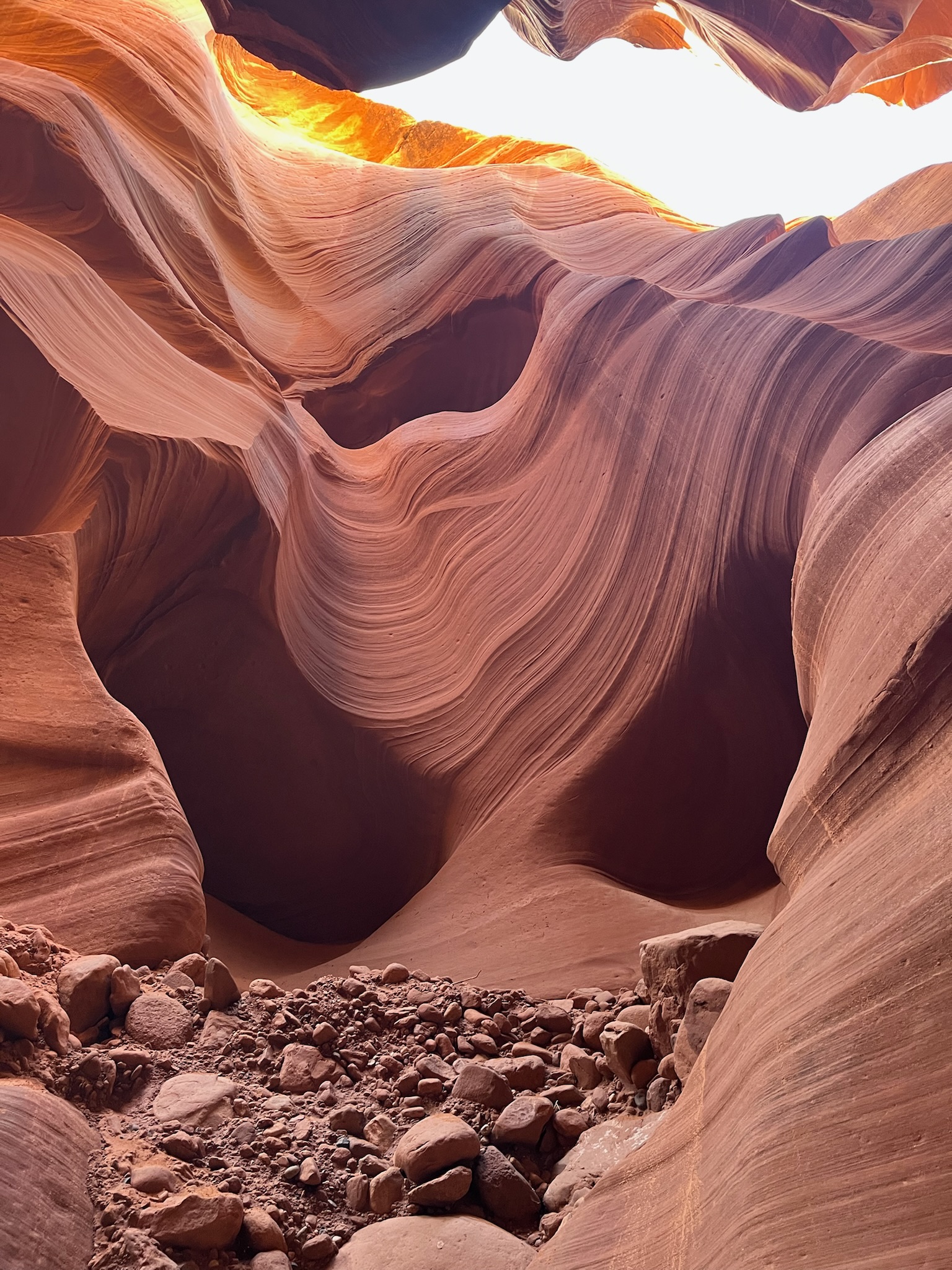
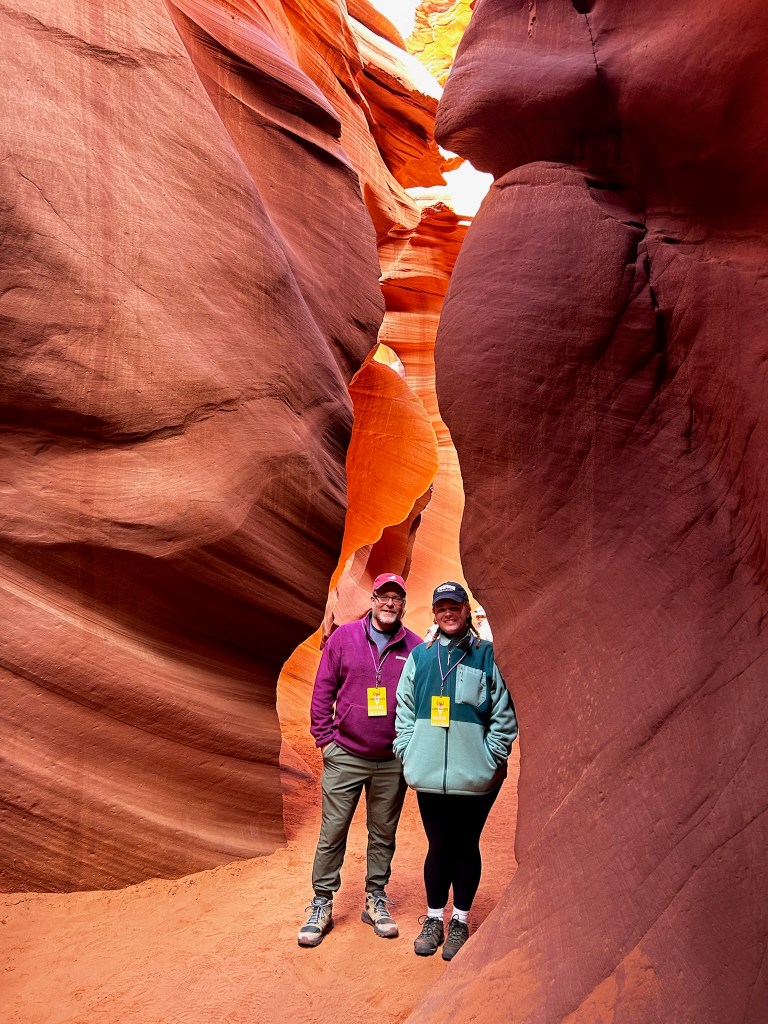
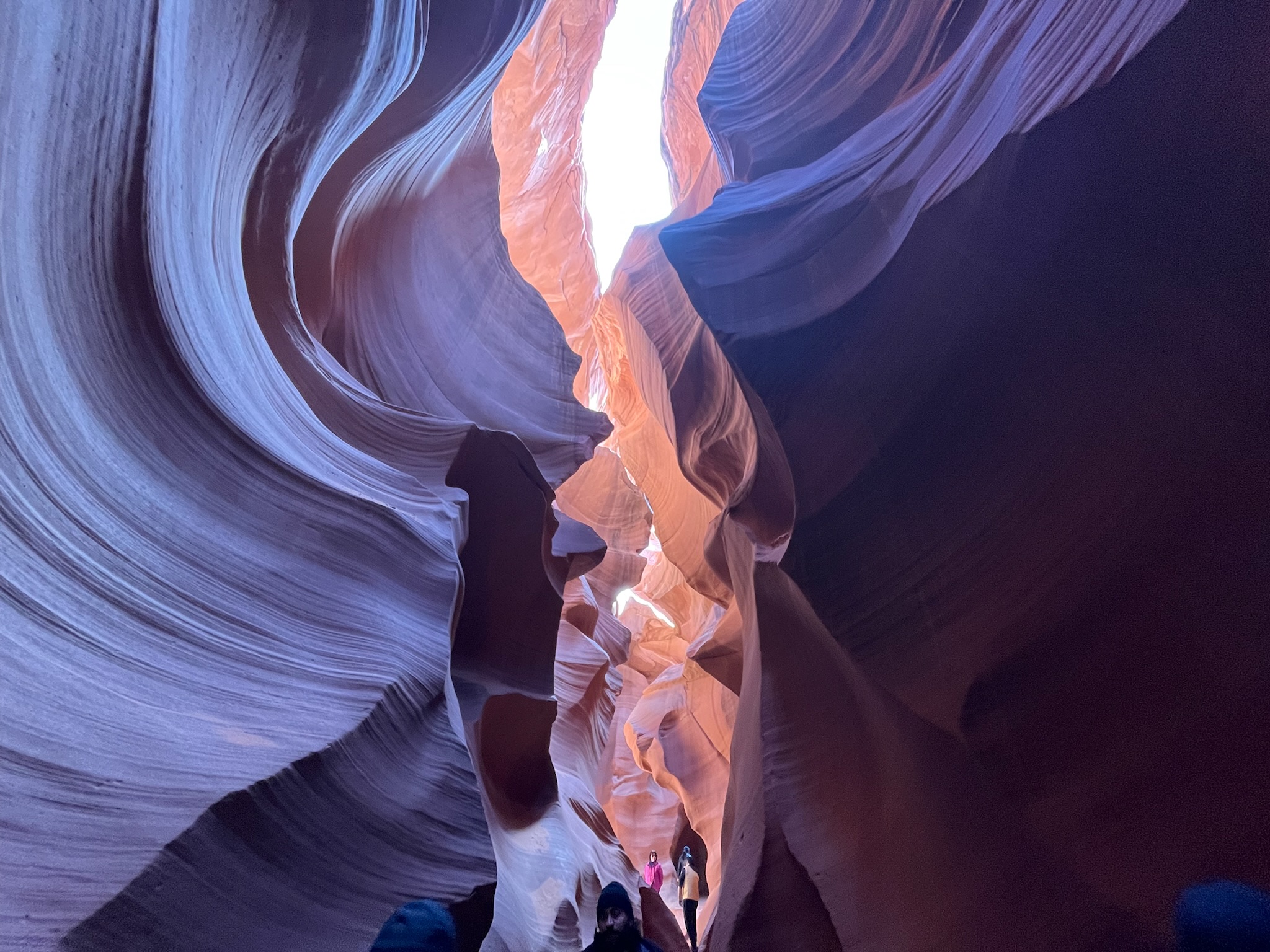
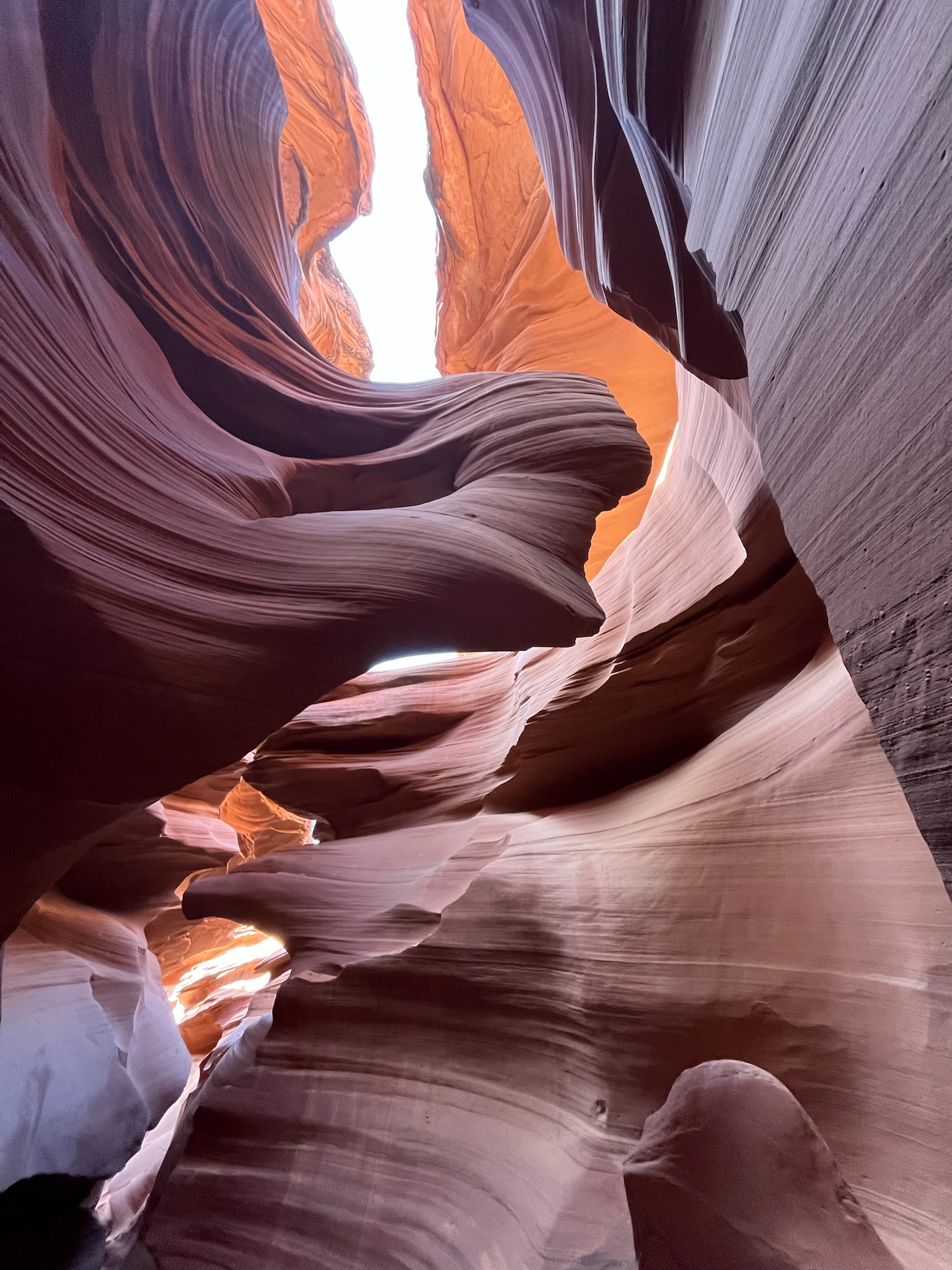
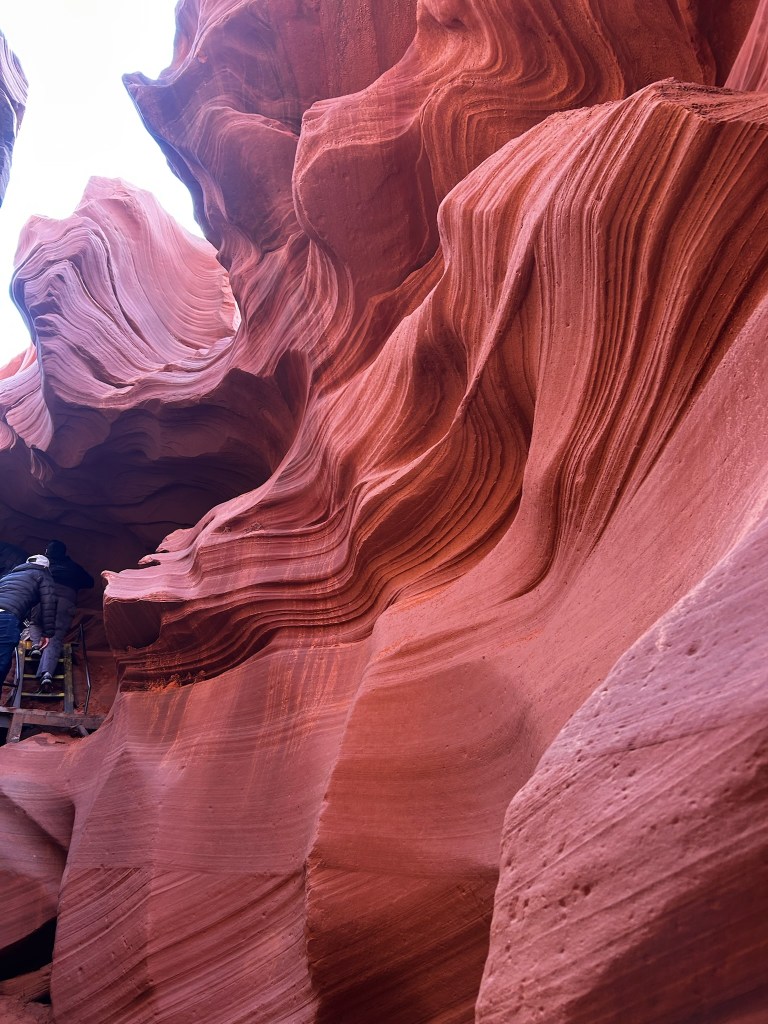
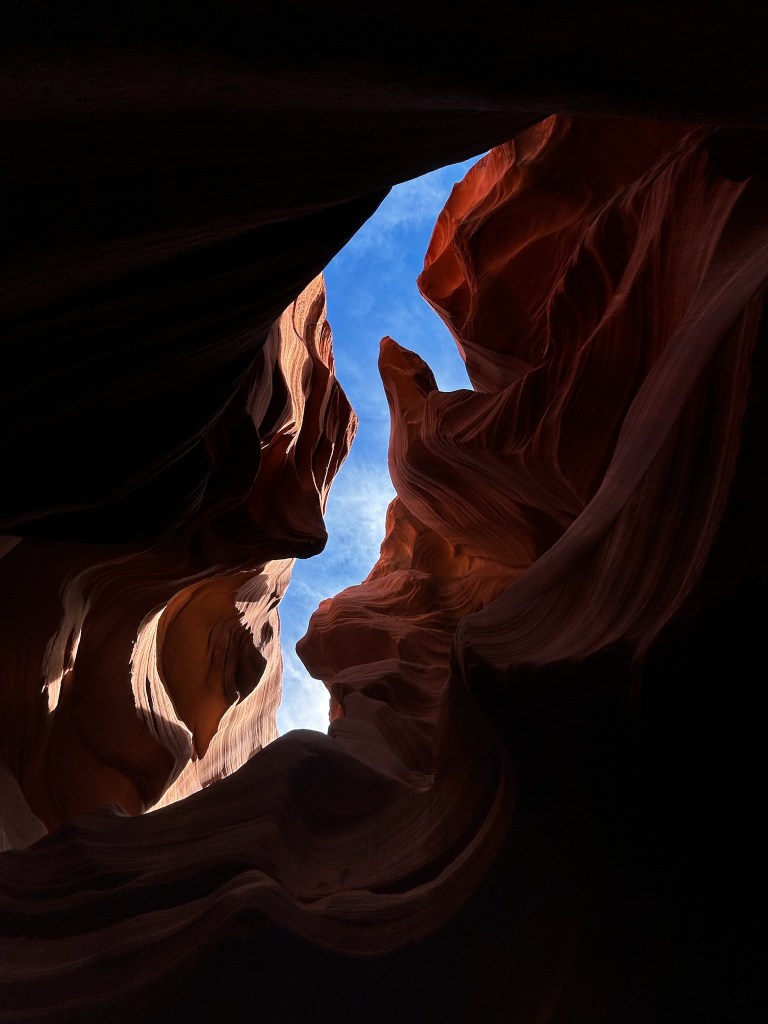
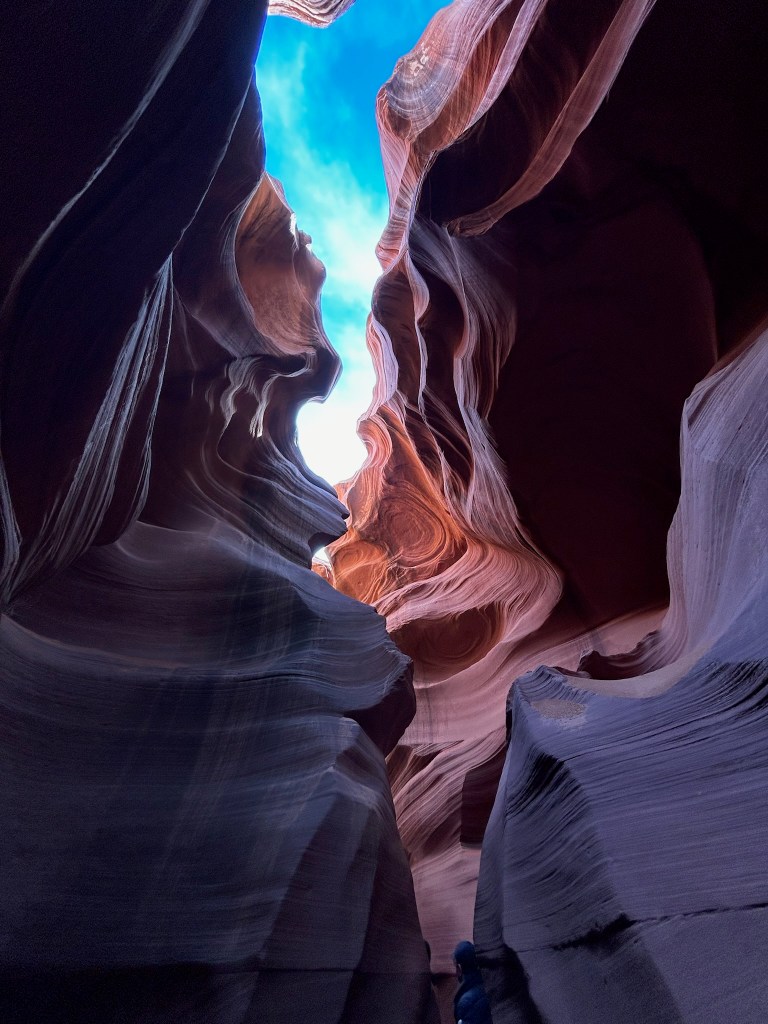
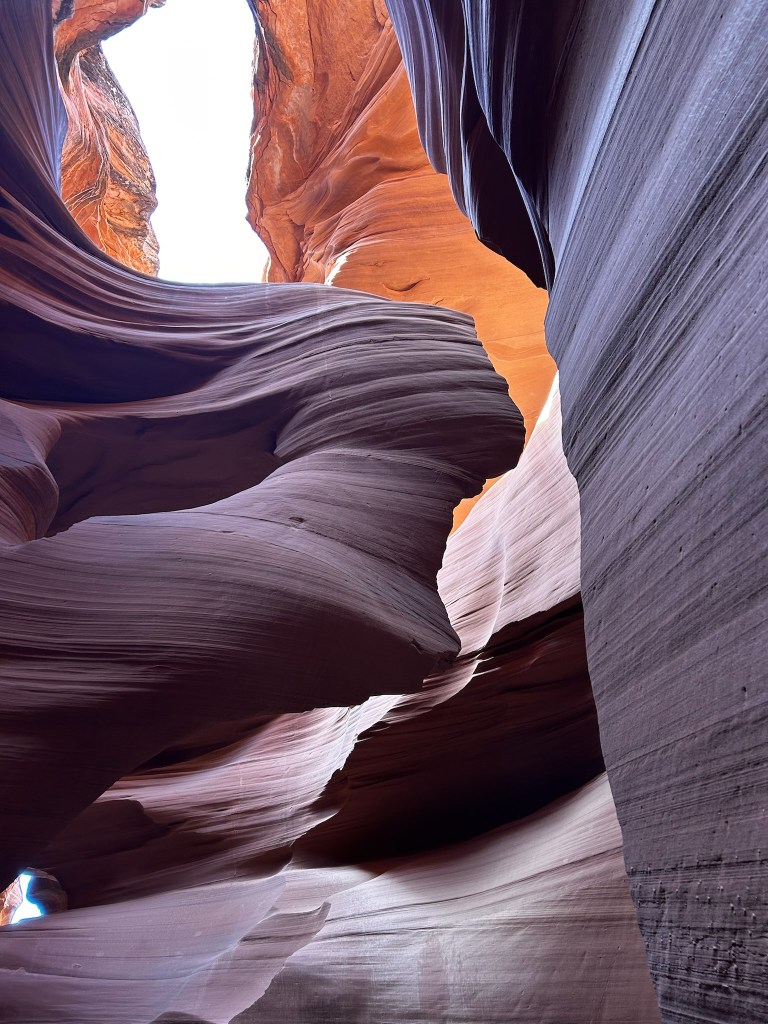
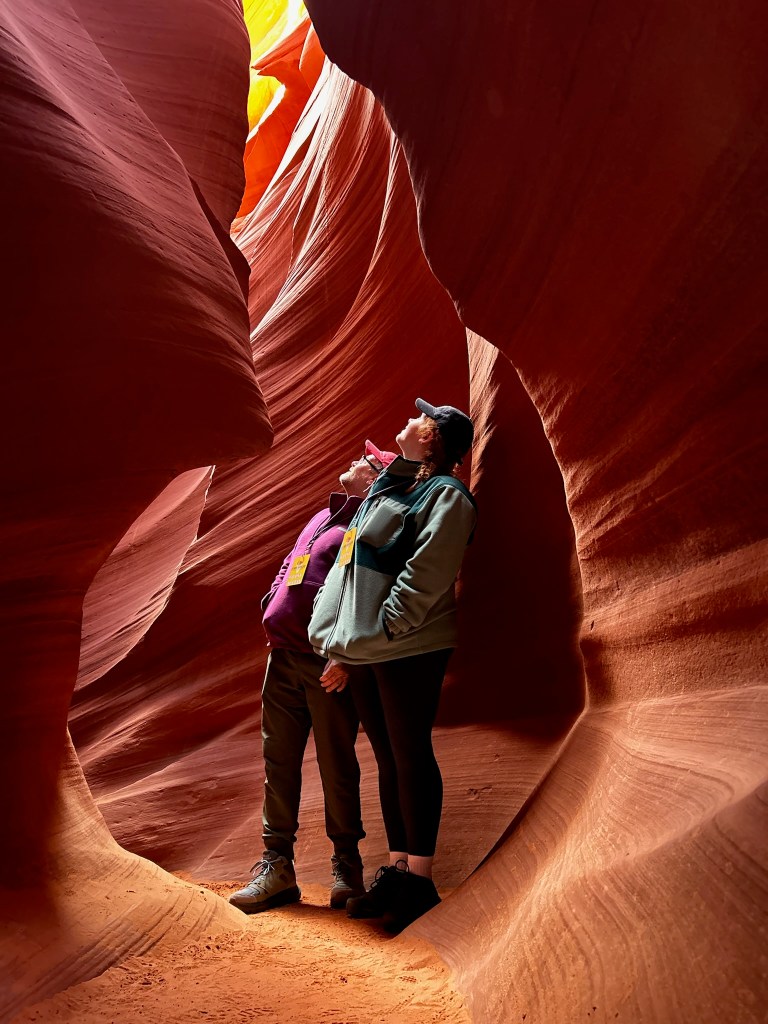
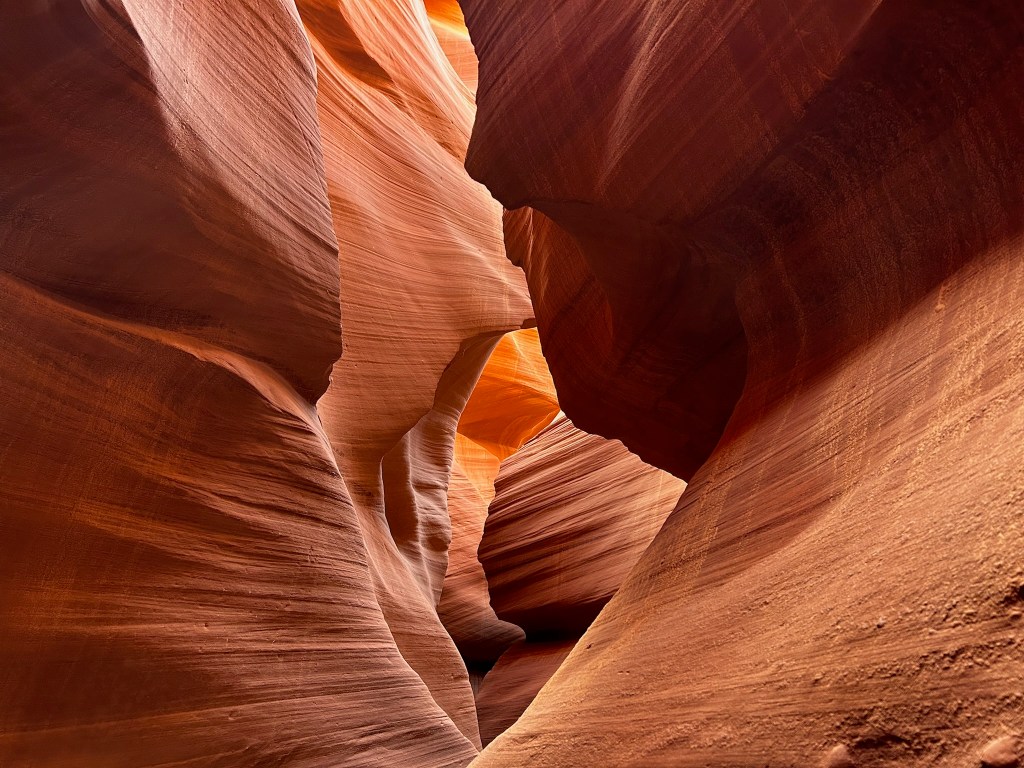
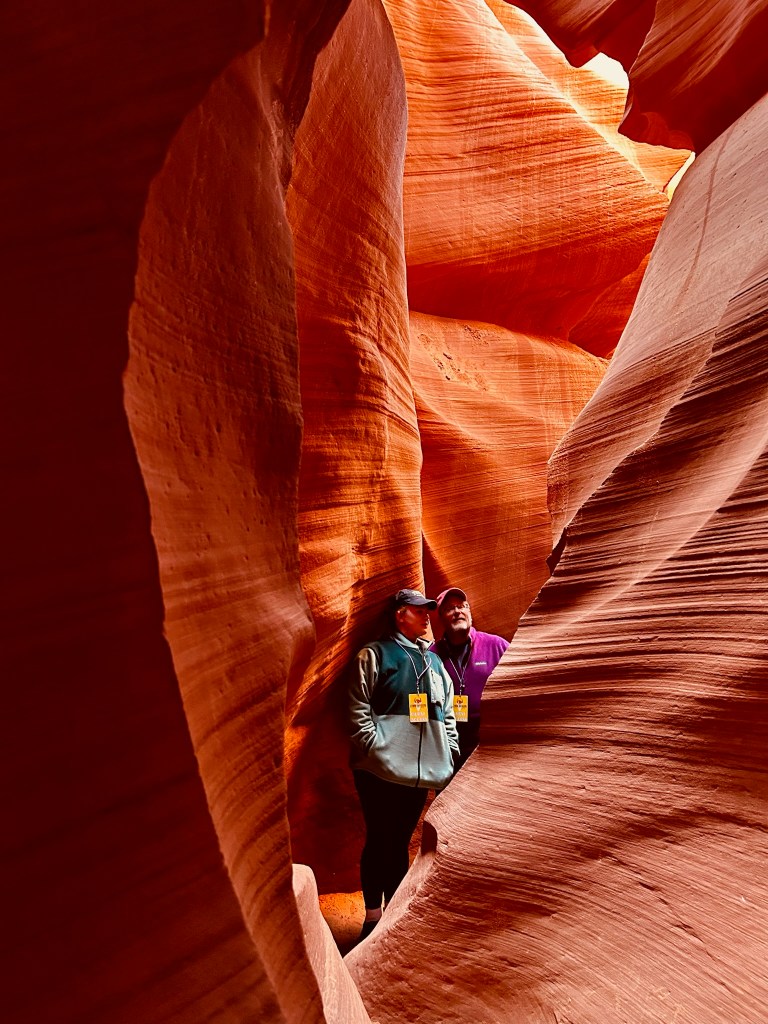
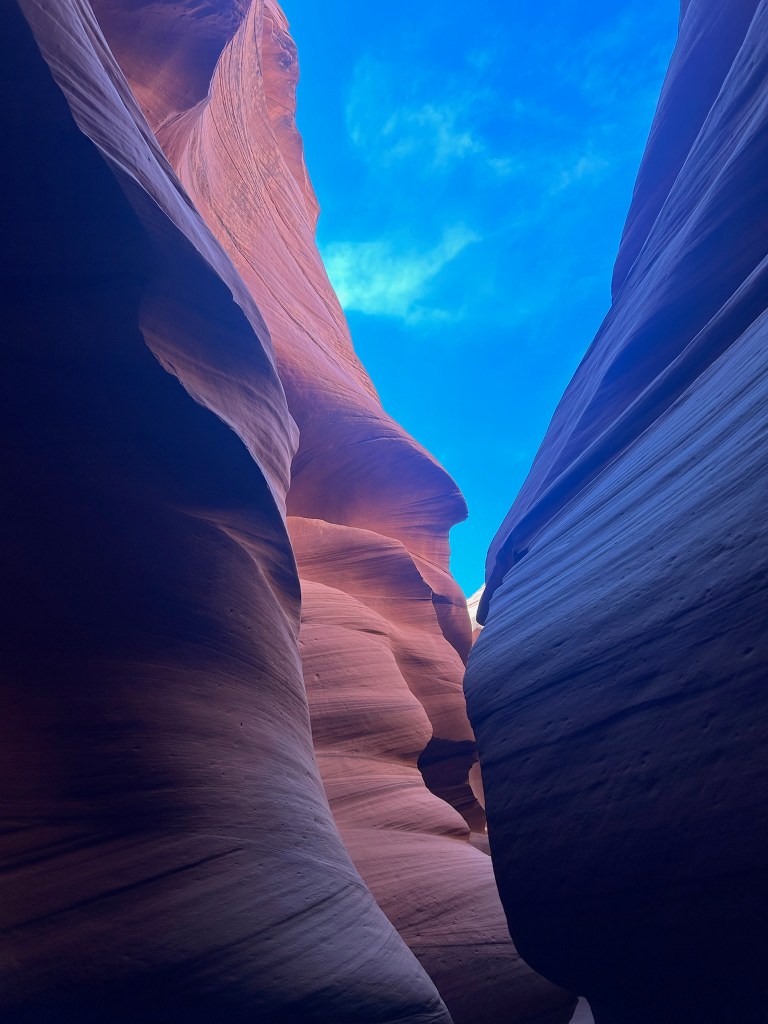
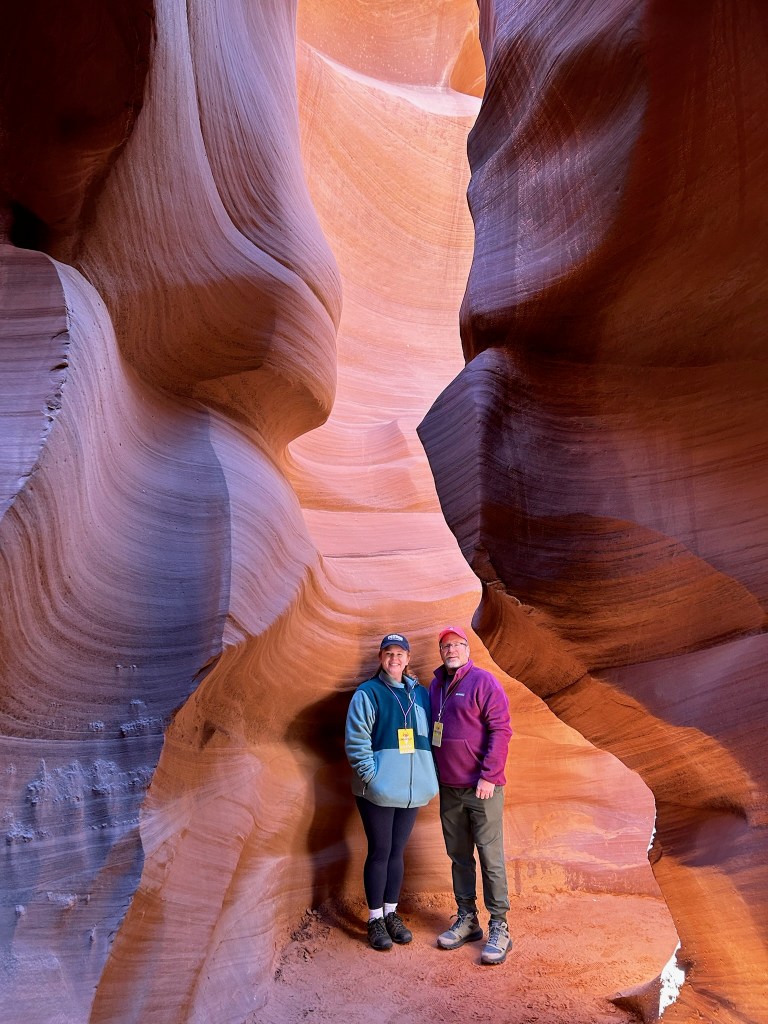
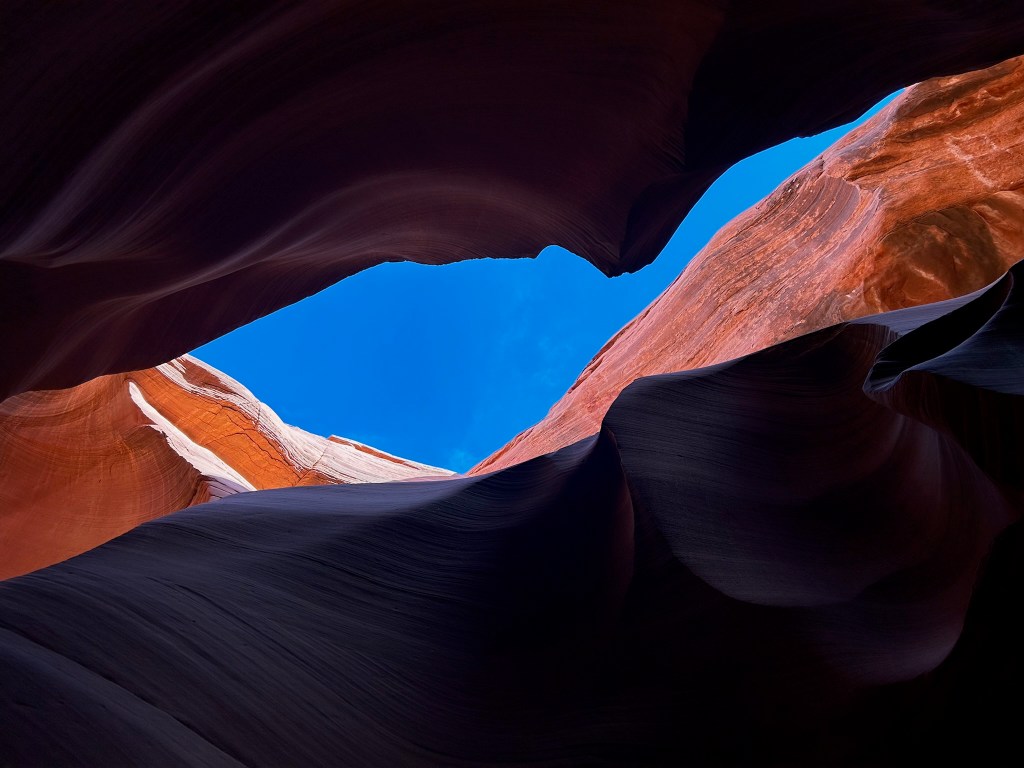
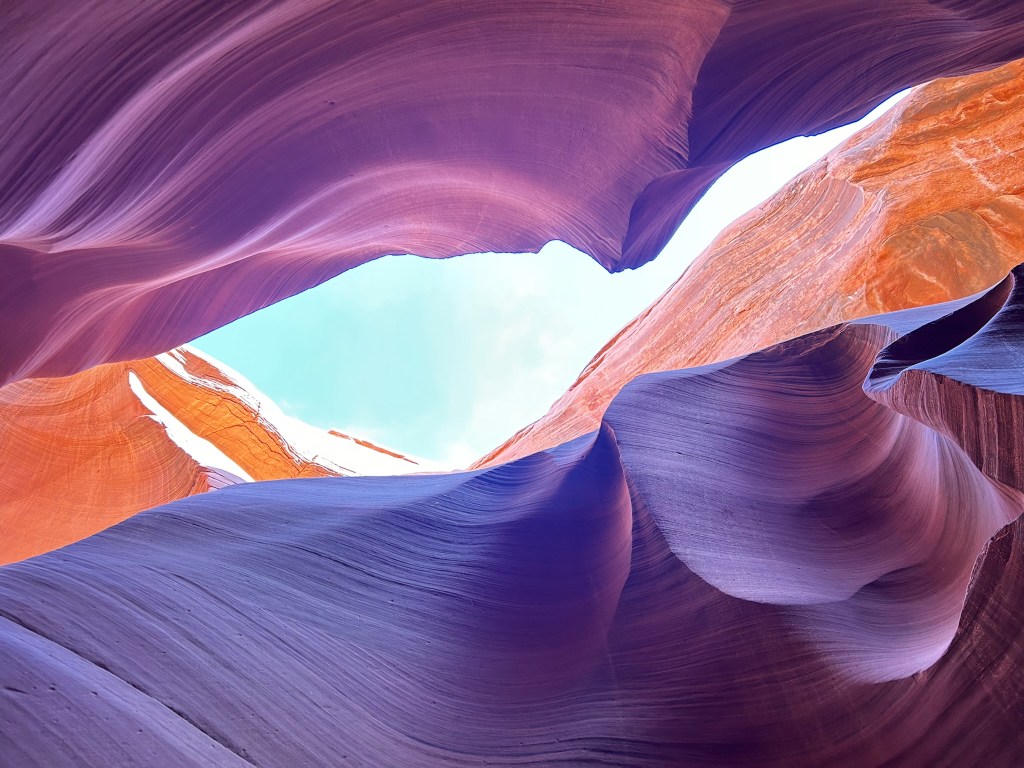
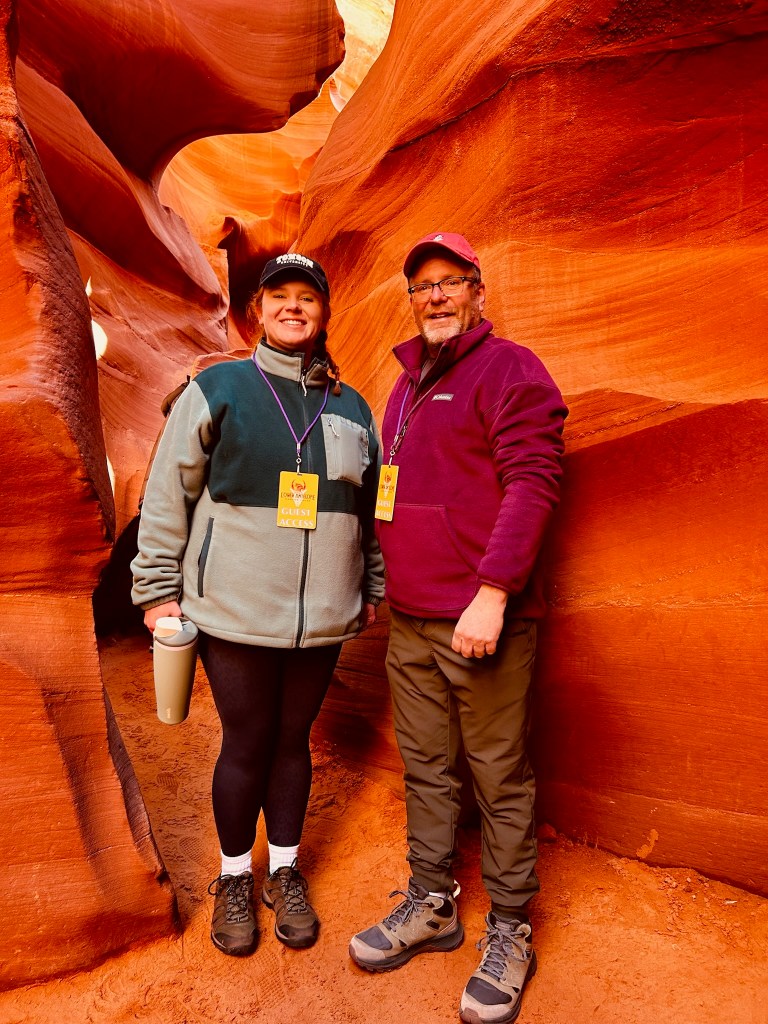
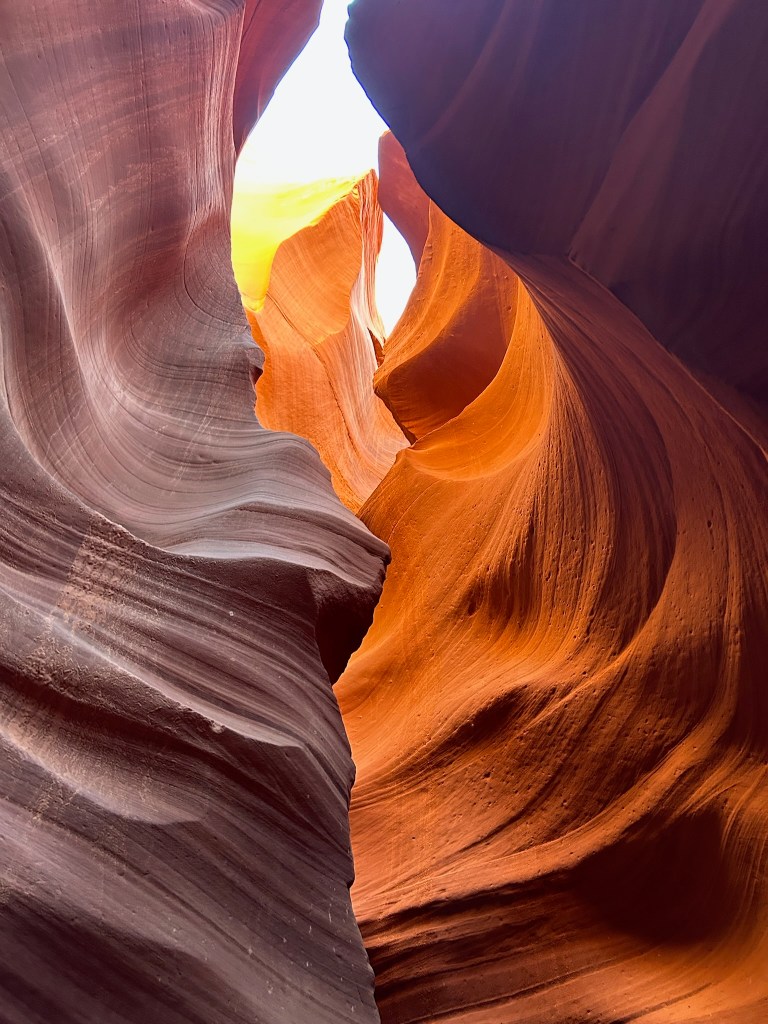
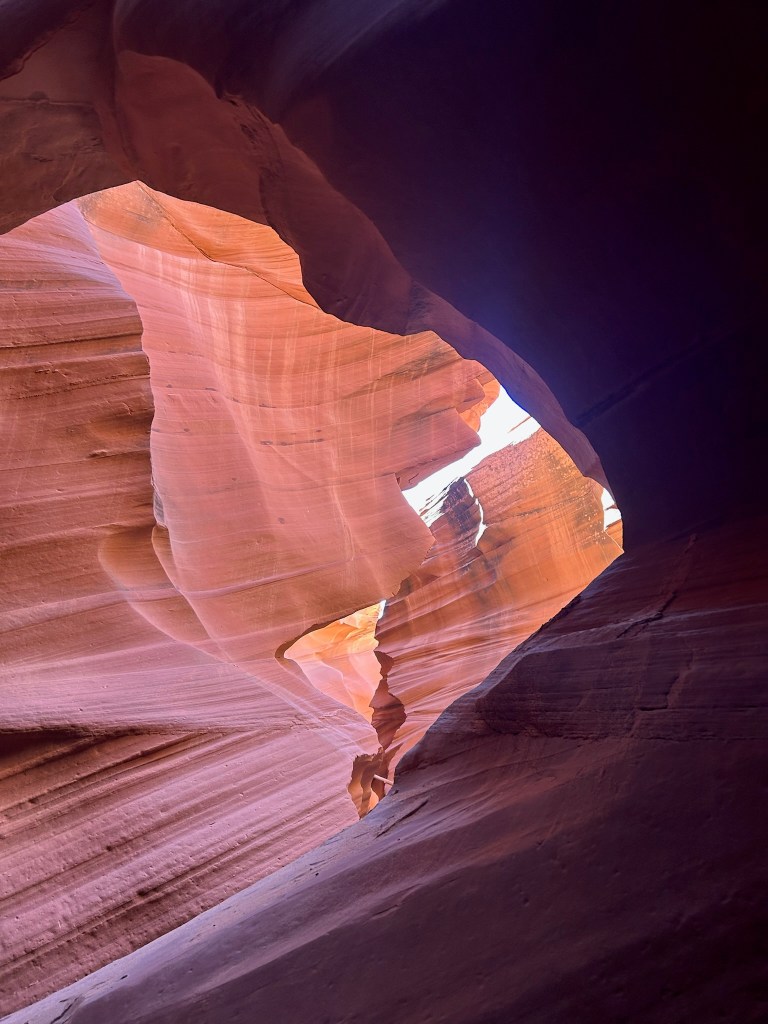
At times the canyon does become quite narrow, but it never feels claustrophobic. Orrin gave us a quick phone camera lesson, which was really helpful, plus he took a bunch of the pics himself- on each person’s camera!
Along the tour, in between descriptions of the canyon, Orin spoke on Navajo thought, lifestyle, philosophy, traditions, and things he learned from his grandfather. A lot of what he said is not quickly digestible, especially by those who grew up in the currently dominant culture, but it was super interesting and made for some good conversation when Bailey and I hit the road again.
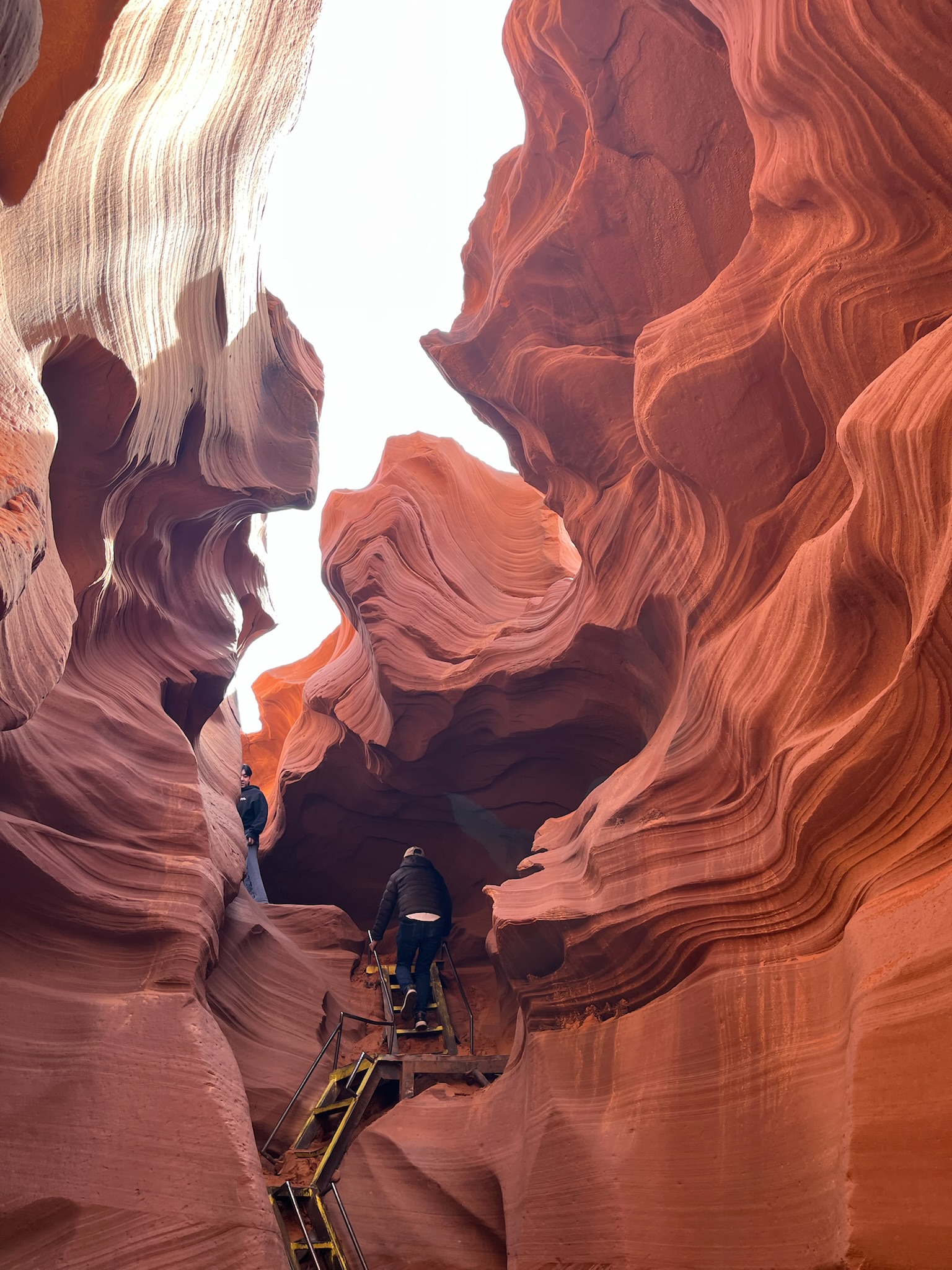
To exit the canyon, you go up a few short, ladder-type staircases, twisting your body a bit sideways at the top so you can pop out onto the ground again. It’s not really that strenuous, and it was not a hot day by any measure, but most of us in the tour group found ourselves breathing a little heavier than we expected after such a short exertion. It felt very warm back on the surface!
Smiling at our panting, Orin asked, “Hey! Who took all the air away up here!”. Apparently it’s very common to feel a second of readjustment to the surface. Orin implied that the canyon air is sacred, and the body needs a second to get used to normal air again. Seems like he might be right!
When I turned around to look at the canyon we had just exited, I was surprised at how underwhelming it looked, especially considering how truly awesome it was inside. Not everybody appreciates this description, but I told Bailey, “It looks like we just crawled out of an asshole.” See for yourself!
Being in the canyon gave me a sort of reset. My chest felt heavy; not in a depressed or “heart-attack” way, but the way if feels when you’re covered with one of those weighted blankets. It was soothing and comfortable. My muscles felt the same as they do after a full body massage. My mind felt clear, cleaned, and unencumbered. I didn’t want to talk for about half an hour. I know this might sound like exaggeration, but being in the canyon really did seem to have good physical, mental ad spiritual effects on me.
If you ever happen to be anywhere even remotely close to Lower Antelope Canyon, I definitely recommend you go visit. It might be the most amazing thing I’ve ever seen.
We spent the rest of the day in Page, Arizona seeing a few other sites, but this post is long enough as it is! Look for what came next in an upcoming post….
 Five O'Clock Shadow
I really enjoyed reading this blog.
LikeLiked by 1 person
Thank you!
LikeLike
Great pictures ‼️
LikeLiked by 1 person
Thanks for looking! 🙂
LikeLike
Awesome pictures! We visited Antelope Canyon last October for the first time since when I was a kid.. pre National Graphic fame. It really is hard to put into words how amazing it is.
LikeLike